How to Survive in an Overstimulating Workplace
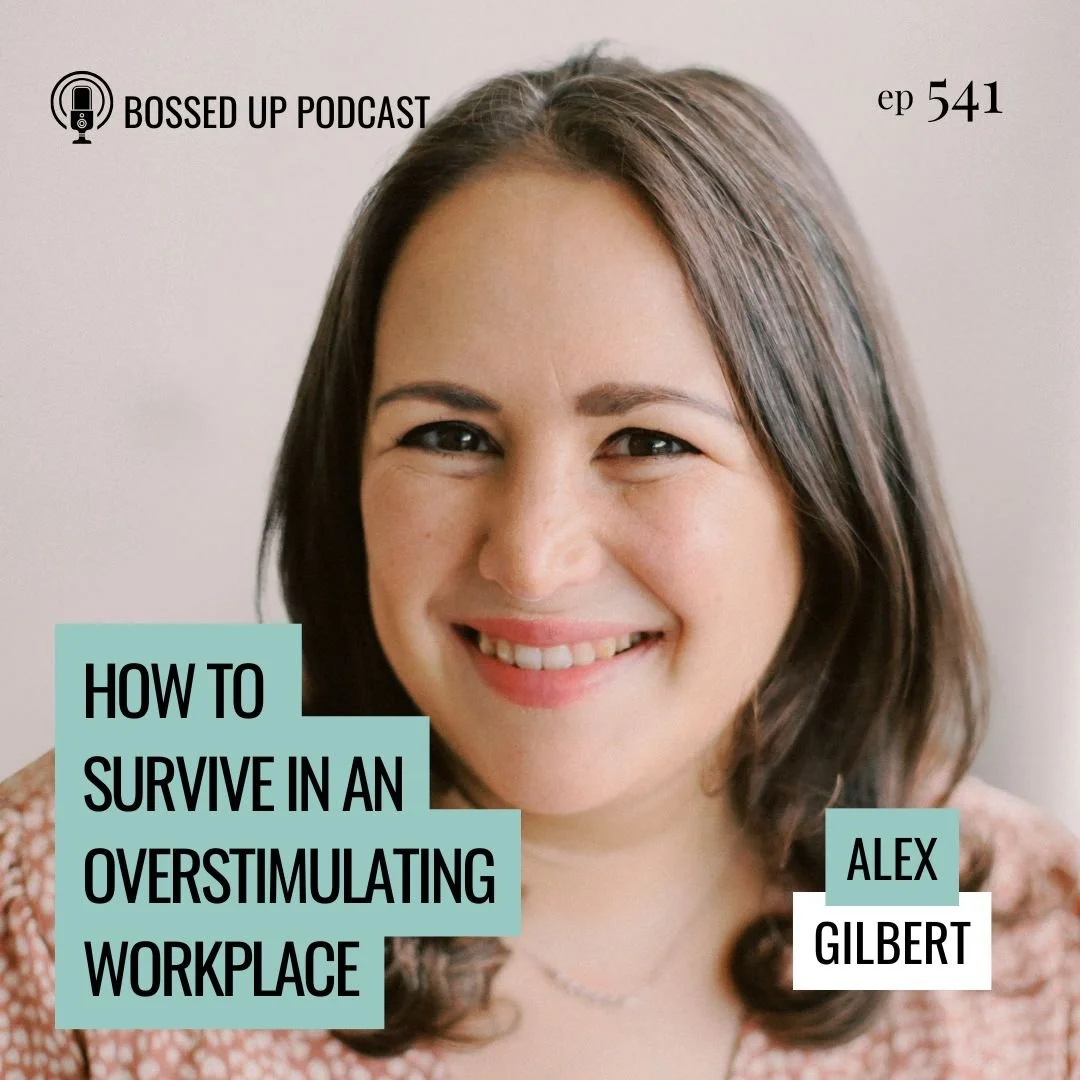
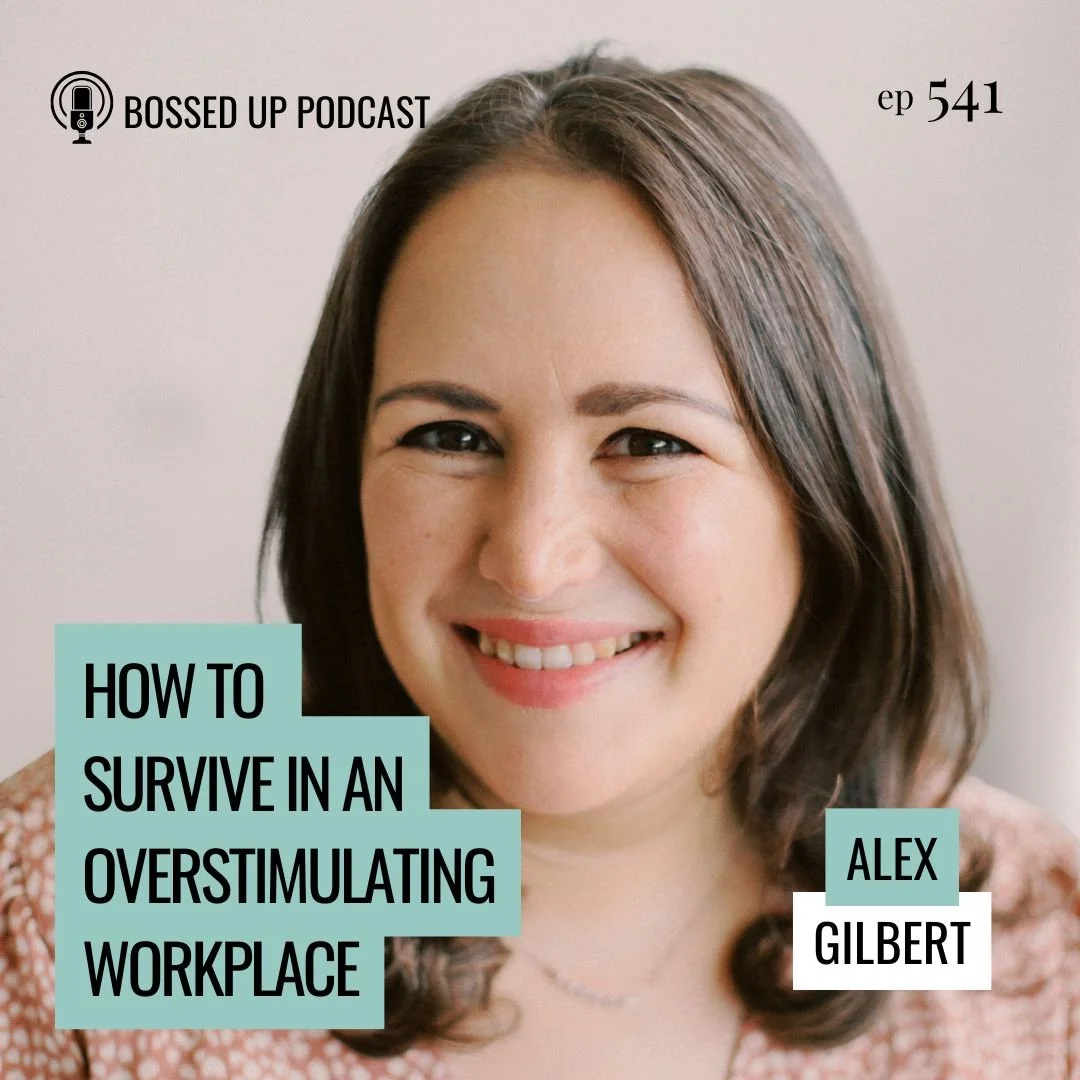
Episode 541 | Host: Emilie Aries | Guest: Alex Gilbert
The constant pings. The emails stacking up in your inbox. Back-to-back meetings. And that chatty colleague making their way to your desk for small talk. How do you actually get work done in an overstimulating workplace?
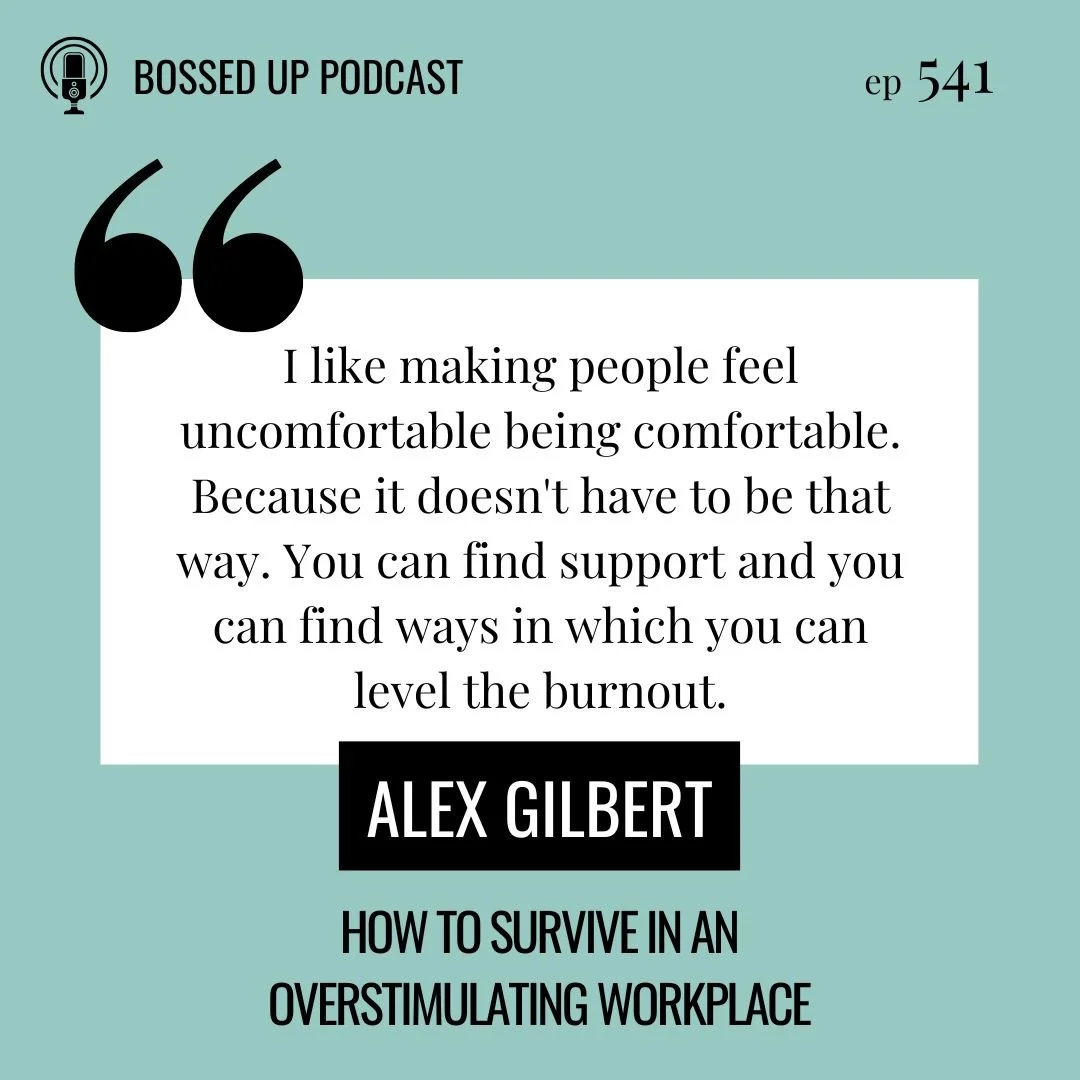
Think about your standard workday. I’m guessing that, in addition to the actual work you have to do, you’re simultaneously bombarded with messages from your team, your phone is buzzing in your pocket with a text from the daycare, and you’re navigating back-to-back meetings. From the corner of your eye, you can see your coworker heading over to discuss next week’s team-building event. This kind of nonstop notification chaos has become all too common in most workplaces - and it’s particularly disrupting for neurodiverse professionals.
Alex Gilbert is an expert in neurodiversity at work and the founder of Cape-Able Consulting, a firm that supports neurodiverse adults and helps organizations transform accessibility, inclusivity, and productivity for all employees. She’s also the host of the I Am Cape-Able podcast. Whether or not you have a clinical diagnosis, you’re likely no stranger to the endless demands on your time and attention, from 9 to 5 and beyond. Alex’s approaches and advice for dealing with that kind of corporate exhaustion and advocating for a more sustainable workplace can help every high achiever manage the mayhem.
Creating a sustainable environment
When she began working as a coach, Alex noticed a lot of parallels between the plans she was developing with her adult clients and the Individualized Education Programs, or IEPs, she received in school as someone diagnosed early on with dyslexia and ADHD.
Every adult is trying to figure out the structures that make life and work feel manageable. After all, as Alex points out, we have two decades of highly structured education before we graduate. Once we’re left to our own devices, demands on our executive functioning skills shoot through the roof. Add to this that women generally feel a greater need to prove themselves at work due to gender bias, and you have a recipe for burnout, whatever your cognitive starting point may be.
When Alex, like so many others, was laid off during COVID, she leaned into her passion for supporting adults with learning disabilities and other mental health diagnoses. She firmly believes that the environments in which we work can make all the difference between a stressful, exhausting workday and a positive one. With structures and supports that enable us to show up comfortably without masking our disability (aka, faking it) or other needs at every turn, we can thrive.
Finding what you need to function
Feeling overstimulated and overwhelmed at work isn’t a fun challenge like figuring out how to run a new project. It’s hard, and for many of Alex’s neurodiverse clients, it results in almost constant negative self-talk. Alex speaks to so many women who don’t believe they’re good enough at anything. It’s exhausting trying to figure out how to function like everyone else, but who can help you when no one (including you, yourself) knows how your brain works?
But figuring out how to function like everyone else, whether you’re skirting chronic burnout because of neurodiversity or any other reason, shouldn’t be the answer. Alex delights in making a client “feel uncomfortable being comfortable,” which results from designing her workplace and workday to create an environment in which she is free to function in her unique way. Once developed, such a structure will naturally elicit productivity and success.
In support of AI support
Alex has long been an avid supporter of using adaptive technology to help generate that sustainable productivity. She used scanners and readers throughout college and appreciates how much more accessible the software is today via AI tools like large language models (LLMs) and chatbots
When she speaks with companies about integrating adaptive tech, Alex explains how teaching workers to implement it is akin to building a ramp at your front door, or adding closed captioning to video: it does more than just help the demographic it was intended for. The right tool can make life and work easier for everyone.
Advocate for the low-stim workplace you need
AI tools are just one example of figuring out where to start when advocating for a better work environment. Simply saying you need a change is likely to leave even the most well-meaning boss or HR rep at loose ends; you’ll have a greater impact if you gather specifics first. The key, Alex explains, is to start with what you already know about yourself and how you work best.
This can look like making a list of what you need or even what you know you don’t want; sometimes that’s an easier place to start. If you can’t concentrate with ambient office noise, you might want noise-canceling headphones or a quiet place to do deep work. If you’re hyper-productive at 6 am but flagging by 2, more flexible working hours could be a win for you and your company.
If you’re interviewing for new jobs, ask about all these features, such as hardware allowances, office layouts, and in-office expectations, up front. If you’re already there, open the conversation with your boss or HR; provide them with solid examples of what would improve things for you.
Disclose or keep it close to the vest?
I clarified with Alex that none of these solutions require you to have a diagnosis or to disclose it. While you can ask for any of these adjustments without sharing more than you’re comfortable with, Alex is a strong proponent of speaking openly about the proven assets that stem from her ADHD and dyslexia (she suggests thinking of the things people praise you for that come so naturally you don’t even notice them). But she acknowledges that the open book approach isn’t for everyone. As you get to know yourself and what you need and begin to identify those work environment red (no-gos), yellow (doable but not ideal), and green (hard yes) flags, you can choose how much to disclose and when while continuing to express your needs.
Ultimately, Alex wants us to remember that more transparency brings more change. Much like that ramp I mentioned above, advocating for a workplace that lets you perform your best without burnout, ADHD diagnosis or not, will echo, prompting even more widespread inclusivity improvements that benefit everyone.
What’s the most exhausting part of our modern office environment for you, and which of Alex’s approaches resonates the most? Whatever the root cause of your overstimulation, you are absolutely not alone. Share your take in our Courage Community on Facebook or group on LinkedIn to find a bit of online support while you build a more supportive and sustainable IRL workplace.
Related links from today’s episode:
Episode 315, “How to Talk About Disability or Chronic Illness in the Job Interview”
LinkedIn Learning Course, “Get Unstuck: Make a Plan to Move Your Career Forward”
Get Unstuck and start making changes
for a better work environment:
-
[CONFIDENT RHYTHMIC DRIVING THEME MUSIC WITH DRUMS AND KEYS STARTS]
EMILIE: Hey, and welcome to the Bossed Up podcast, episode 541. I'm your host, Emilie Aries, the Founder and CEO of Bossed Up, and today's conversation is for the overstimulated woman in the workplace.
[MUSIC FADES AND ENDS]
The person who has had enough of the Microsoft Teams messages, the pings of the sound of an email hitting your inbox, your phone buzzing with a notification from your kids daycare app, and your colleague walking over to your cubicle to strike up a conversation. If that kind of sensory overload just sends you into a spiral, then you're going to appreciate hearing from today's guest, Alex Gilbert.
Alex is a returning expert. She was on the podcast a couple years ago when we talked about managing ADHD in the workplace specifically. But she is an expert as it pertains to all kinds of elements of neurodiversity at work. She's a podcaster herself, a speaker, and the founder of Cape-Able Consulting, a firm that provides expert consultation and support for neurodiversity in the workplace.
A leading expert on supporting Neurodiverse adults at work, Alex partners with organizations to transform accessibility, inclusivity and productivity benefiting all employees. She's the host of the I Am Cape-Able podcast, which bridges the gap between Neurodiverse employees and their employers through candid conversations, education and practical workplace insights.
And today, she's joining me on the Bossed Up podcast to talk about how to navigate the kind of exhaustion and burnout that comes with masking all day, every day at work. When you are the person who holds it all together, who becomes the go to, who quietly overcompensates for perhaps learning disabilities, perhaps neurodiversity, perhaps just the amount of labor that you've taken on quietly or otherwise at work. That level of exhaustion adds up. And today we're going to unpack how we navigate it and how we advocate for what we need to be more sustainable. So, Alex, welcome back to the Bossed Up podcast.
ALEX: Thanks, Emilie. It's been a while. I'm so glad we get to catch up. I feel like so much has happened in our lives since the last time we actually, like, talked on your podcast. So I'm excited to be back.
EMILIE: Totally. And I've loved keeping up with you from afar and kind of seeing all that's transpired because you continue to impress, so.
ALEX: Well, thank you. As do you.
EMILIE: I'm glad you're here.
ALEX: Me too. Me too.
EMILIE: We're both getting over toddler derived colds too, so I just want to flag that we're in the thick of motherhood, you've got what, a three year old now?
ALEX: Both of our kids are almost like weeks apart. So we got three and a half year old. And a will be 18 month old next week.
EMILIE: Oh my god. Crazy. Yeah, we're just about on the same, same boat. So I think that adds actual dimension and depth to today's conversation. Because I want to talk about overstimulation, right? [LAUGHTER] Like being.
ALEX: What is that? Like, it's almost like we started out this whole conversation of like, let's clear all the baggage.
[LAUGHTER]
EMILIE: I know. What listeners don't know is that literally I logged on and Alex, I was like, give me a minute. All the piles of crap that were on my desk that I moved to my dining room table behind me, I now need to move out of frame so it doesn't clog up the scene. And of course I just move them to another counter.
That is sort of a nice little microcosm of what life can be like as a mom and as a person and particularly as a neurodiverse woman navigating just a lot of sensory input. And so why don't you give us a little sense of, for the listeners who may have missed your former appearance back on the podcast in 2023, called How to Manage ADHD in the Workplace, which I'll link to in the show notes, give us a little background of who you are, what you do, and how you came to this subject matter.
ALEX: Sure. So I'm someone who was diagnosed with dyslexia and ADHD at the age of 8. And I had resources all the way through college. And then when I graduated and started working kind of in career development, kind of really helping people with their leadership development, I realized so much of what I was doing was creating kind of individualized education program, if you're familiar with the terminology of IEP for adults. Regardless of having a disability. I was helping them figure out their strengths, helping them figure out what structure made sense for them and how they can kind of climb the ladder or show their leadership in some way.
And then I was laid off from my job due to COVID. And I have been wanting to support adults who have learning disabilities and ADHD my entire life. And so this was such a great way for me to apply the skills that I already had to adults. And so I work with one on one clients, helping them figure out what their strengths are. And then I work with companies to create more inclusive environments because I think the environment is even more important than the job itself and how we create thriving people is having structure and support around you. So that was kind of what I've done over the last five years.
And I've also launched a podcast called I Am Cape-Able. C A P E. Cape-Able, the way my company is spelled, to try and bridge the gap between adults who are neurodivergent and their companies to try and find the right language and communication styles to support their needs and really excel beyond belief.
EMILIE: Absolutely. I love it. So today I want to talk about what, how neurodivergence shows up how neurodiversity shows up and what that experience feels like, particularly for women, right? Because we know that the research around things like ADHD and autism historically really centered men and boys, and so many women have been quietly suffering without even recognizing or getting a late diagnosis. Unlike you, right? And just not having a lot of support along the way. So why don't we start there? What does it feel like to be a woman navigating white, knuckling her way through that?
ALEX: Oh, my god. So hard. And the reason I say hard instead of challenging is because there is a very big distinction between hard and challenging. Hard is something you are constantly overcompensating for. Challenging is something that you're naturally good at and you were applying, you might be excited about it. And it is like a fun way to navigate. When something is hard and you are overcompensating, you are not doing something you're naturally good at. You have this negative self talk that just constantly weighs on you. And so many of the women in particular that I talk to are so, I don't want to say in this mode of self doubt, but they have this dark cloud over them of they're not good enough at anything.
And it's, and then women who are in particular, who are neurodivergent tend to see things as black and white. It's either I'm awful at everything or I'm amazing at everything. And you might actually have the same exact feeling or one end of the other in the same day, but it's nothing in between. And that hot and cold, that up and down all the time is very exhausting. And you're trying to look at how other people function and think, why can't I sit down and do it? Everybody else can do it. It's like, well, that's not how your brain works.
But when you don't know, you've had this disability and you don't know anything about how your brain works, and no one can really see that you're struggling, they don't help you. And I joke. I was like, what is the correlation between women who have ADHD? Oldest daughter syndrome. I mean, it's just like all wrapped up in one sometimes. So it's hard. It's really hard.
EMILIE: Yeah. And it's exhausting, right? I feel like sometimes I come across women in my burnout programs or talks for companies and to your point, they kind of blame themselves. Like, what's wrong with me? Why can't I just be sustainable in my pursuit of success? Like, why am I so chronically exhausted and burnt out? And you know, like, we are so quick to blame the individual, even ourselves. The individual ourselves. That critic is so, that inner critic is so loud that we, we rarely pause to ask the bigger questions, like how is my environment set up to help me or to make this more difficult for me? And what do I uniquely need to be successful, right?
ALEX: Yeah. And I, when I talk to people about it, you know, I just had a client yesterday who was sitting there and we like to talk things out. People who are neurodivergent tend to talk things out. That's how they think out loud a lot of the times. And when we were having this conversation, she was like, I'm bored. And then I realized she wasn't bored. She was actually comfortable and was uncomfortable being comfortable because all of a sudden we took out all of the main stressors of what she was focused on because we changed the environment of who she was with.
And it wasn't just where she was working, it was what she was doing at home that was different. And she was so used to working at a pace that was so intense because she didn't know any different. Of course, in the high achieving women, I think the entire C-suite of women is filled with neurodivergent women for that reason. But all of a sudden she sat there and she was like, I feel like I'm, I'm, I don't know what to do with myself because I'm comfortable. And she had to like, say that out loud like a few times. And I was like, I love making you uncomfortable being comfortable.
And I was like, you have all these goals that you're trying to achieve and actually sitting back to realize this was what you were trying to achieve. Sit with it and be comfortable with it and be okay with it. She was like, do I earn it? Do I deserve it? Is there something I should be doing that's different? And I'm like, this cycle of what we tell ourselves is so loud. And it's not just something that we feel internally. It's also the environment that we've been in for so long that kind of sets you up for that. So, as I said, I like making people feel uncomfortable being comfortable [LIGHT LAUGHTER] because, you know, it doesn't have to be that way. You know, you can find support and you can find ways in which you can level the burnout.
EMILIE: So real. So real. I have so much ADHD in my family that you are just describing so many family norms in my extended family that it's just like blowing my mind. And, you know, it's not a coincidence that I grew up and write the book and talk about martyrdom mindset and like, maybe it's okay to rest because there are so many hardworking members of my family, myself included, who feel like if I don't have a fire lit under my a**, will I be able to produce anything? Will I be able to achieve anything? Like, if I'm not sprinting from a place of danger and that sort of cortisol rush, can I achieve? And there's just a softer way that we can be successful that doesn't involve such brutality to ourselves that sometimes that's like a lifetime's worth of work.
ALEX: But even as you say that, in general, the clients that I work with, when we, when we talk about that, like needing the fire under your a**, I'm not going to take that away because here, here's the thing about it, that is a motivating factor for you. If I take that away entirely, you're gonna search for something else. And maybe it's, it's negative in a different way. And this we can work with. And it's not that, you know, we need it to be. You have a deadline that's due tomorrow at midnight, start it at 12:00pm you know, uh, it doesn't have to be like that all the time.
But there is something about that that gives you that dopamine fix, that gives you that drive, that excitement. And maybe the rest of the project that you're working on isn't exciting and so you need that. So it's, I never try and coach people in a way that is so foreign to how they naturally think and have that drive because that's the spark in us. That's what's fun. That's what, honestly, I feel like the reason we're so creative is because we have, like, last minute fire under our a**.
EMILIE: Yeah, that's real. That's real. So tell me more about, like, what this looks like. When we're describing neurodiverse women in the workplace, who often are high achieving high performers, what does masking or overcompensating look like when you're navigating that sort of cycle of hot and cold and that intensity with which so many neurodiverse folks work?
ALEX: I think I would be completely dismissed to say that the fact that women are not seen as equal and in most companies not paid what their male counterparts are doing. Women of color are also paid significantly less. I mean, it, there's, there's a number of different factors in that which add to the layers of I need to prove myself and I need to have the perfectionist mentality. There can be absolutely nothing you can poke a hole into. What I present has to be bulletproof. And you also say yes to everything, whether or not you can actually achieve it, do it, whatever, if an opportunity is presented to you, yes, of course I can do that.
And the other added part is, even if you don't say yes, you have become the go to person for all of the other things. So even if it's not fitting in your job description, it's like, oh, no, no, no, Alex, you're the go to person. She, you have to ask Alex. She's going to know. So all of those things wrap up into these high achieving women in the workplace and that burns you out a lot. And if you don't know how to structure something properly for yourself, if you struggle with the time management, if you are have that really messy desk and want to sweep it all off, where did that paper go? You know,...
EMILIE: Feeling a little called out right now, but okay, you know what?
ALEX: …look, my desk does not look any different than yours at the moment. I would say that like so much gets caught up in that. And you also are struggling with the fact that like you can't write it down or you wrote it down and it's on a different piece of paper, you lose sight of a lot of this. There was a study I read recently and I, if I find it, I will send it to you to add into this. But it was like men, they thought that people grew out of ADHD, learning disabilities, any type of neurodivergences after like 1821, when you went to college, mostly based on the fact that men who were in the C-suite had executive assistants who did all of the stuff for them. So they're like, oh, men, you grow out of it. You grow out of it.
EMILIE: Somehow they get organized. Yeah.
ALEX: So it wasn't just like the executive assistant, it was the fact that their wives did everything for them too. So all of a sudden all of the skill sets that you lose sight of, you don't grow out of them. And I think what is also completely dismissed and why I'm so frustrated with how things have transpired in terms of support once you graduate, is there's more executive functioning needs as an adult because everything in school is so structured already. And so, you know, the burnout isn't just from the actual workplace place itself. It's everything else in life that you were trying to manage too. And they bleed into each other a lot. So you show up to both burnt out.
EMILIE: Yes. Oh man. It's like you're exhausted when you come home from like overcompensating, over preparing, masking all day at work, trying to hold it together.
ALEX: Mhm.
EMILIE: And then life admin catches up with you and you're like, tax season. What the h***, no, I can't do this, right?
ALEX: It's so hard. And the thing is like, people will mask at work and unmask at home and feel like themselves, but they, they can't function to do the simple tasks. Also, they're the least interesting things in terms of like, making those doctor's appointments or taxes or anything like that.
EMILIE: You know, this question is just emerging to me because I've got AI on the brain a lot these days. And when you talked about the executive assistant component to senior executives, I thought right away about Agentic AI and how in some ways we all have access to an executive assistant now for about 20 bucks a month. How are you seeing the use of chatbots or AI or large language models support neurodiverse?
ALEX: Folks, I love that you brought this up. I have been using adaptive technology since college and I'm not going to age myself, but, you know.
EMILIE: [LAUGHTER] Yeah, you're a millennial.
ALEX: Two thousand and tens-ish. I, you know, was graduating college, but like, I had, I had programs that read to me, I had things that scanned everything for me. I had all of this technology for a very long time. So me adapting to adaptive technology was like, give me all the fun and love here, because I'm into it. This is helpful. And now a wider margin of people are getting used to it. And this is kind of when I talk to companies and I talk to individuals about the use of adaptive technology and using AI, I'm like, listen, these are the components that are going to not only help the individual who's neurodivergent, but is helping the broader company. It's like building a ramp to your front door. It becomes accessible to the person in a wheelchair, the person using a walker, the parent with a stroller and the able bodied person able to walk through the front door. And now you have technology that is usable to everyone. So train people how to use it.
Now the thing is the technology is only as good as the information that you give it and sometimes it makes its own information. But a lot of the times I mentioned already that neurodivergent people really like to talk things out and so when they talk things out the creative juices are flowing. They're not focusing on the actual words themselves but how to apply it. So for years I have been like, recording my thoughts on Zoom and uploading it into like, ChatGPT. I'm like okay, create me the schedule and the timeline and the content of which I'm going to send this email and how can I set up the automations that will remind me that I said this, and if I sat down to do a single word of what I said I would not be able to sit down.
And a lot of the times the overwhelm that we talk about when it comes to people with ADHD is the where to start. And so, a lot of the times you want to reach for the part that is easiest to start. So huge component of that is using AI to your best of your ability and there's so much worry about how this can take over your job. I'm like you, again, you need to learn how to use it to the best of your ability with the skills that you have be trained in this material so that you can get ahead of it. But I think it's only an added bonus rather than a deterrent.
EMILIE: Yeah, I waffle, you know I'm such a black talk about black and white thinking. Like one day I'm like this is our dystopian nightmare, this is how the world ends. And then the next day I'm having a conversation like this and I'm like this is the great equalizer, you know and maybe it's both like it could, it can both like ruin our economy and make our lives better somehow. [LAUGHTER]
ALEX: There is definitely, you know I work with a lot of engineers shocking, you know, who are neurodivergent and so some of them are like well I would probably use this tool for this thing. If you want more information on that I would say come talk to me personally and I'll give you more insight as to what I specifically use for different components and why? I mean, there's definitely some security risk in some of the tools over others, but I think that you have to start with what do you know? And allow it to create like, timelines and emails and things from what you know versus asking it to give you information.
EMILIE: Right, for sure. And to your point, for those of us who want to verbalize, like, talk it out and have trouble deciding where to start, I mean, you can literally not only upload an audio file, but you can dictate things to Claude by Anthropic and you can have a talk back to you.
ALEX: Right, I do that too. This was, like, so long ago. I've been using Zoom for a very long time, but that was like, how I started using the audio features was like uploading my audio to figure out what it needs. But yes, Google Gemini Live also has like, a component that you can, that you talk to. Also lots of different tools to be able to have that back and forth.
EMILIE: And it's like, where should I start? Is a great question for AI. Like, dumping all your thoughts in and then saying, here's my problem, where should I start?
ALEX: Right. But if I were to have that conversation with you, you know exactly where to start and you share it. But when you start with sitting at your computer, okay, can you write an email to these executives saying, this is where we need to start and here's the timeline, and how do you break it out? You're like, okay, did I put a comma here? I'm not. I'm not really sure. And how did I start? Did I have enough bullet points?
EMILIE: Okay, so let me shift gears a little bit, because I think the ramp to the front door is a really good metaphor for today's conversation. Whether you're tuning in as someone who is diagnosed with something neurodiverse like Autism or ADHD or a learning disability, whether you're neurospicy or neurotypical. The tactics and strategies that we are describing here to navigate a very overstimulating work environment that we all are operating in these days can be very helpful for everyone.
So in an environment where we're getting Slack pings, our texts are going off in our pocket, you know, you're getting an email dropped into your inbox while you're trying to work on the actual content of your day job, and maybe someone walks up to your cubicle and starts have conversation with you in real time. Like, how are any of us supposed to create space and time for focus in a sensory overload environment? That has become the norm for our offices.
ALEX: I love this. This is so much of what I talk about on my podcast because of everything you've just mentioned and trying to find ways in which you can communicate with your boss, your manager, your team, whoever, to find what that looks like for you. Because as a broad statement, let's say you were in a physical office space. Anytime I've walked into an office space that isn't just cubicles, but just open space, I have hives because there is no way in which I can function like that on a five day work week pace.
EMILIE: Death to the open office concept, right?
ALEX: Google started this and they don't even do that anymore, I'm pretty sure. So it like, you have to have a lot of different options for spaces or having those days in which you work from home and you're focused at home on the actual physical work versus in person, you're focused on the communication with your team members to figure out what, what are the next steps, that those are different options. But I think the key here is learning what are your needs and how to find the right support and accommodations for yourself.
And everybody is advocating for themselves, whether they are neurodivergent or they're not, whether they have kids or family at home that need their support and they need to be home. Like, you are a whole person who shows up to work, who has needs. So showing up to a space that is overstimulating, what does that look like for you? And I think that was the biggest mistake I learned in my job seeking process of I was in a really awful job. And I was like, anywhere's going to be better than where I've been. And so I took the next job without asking any of those questions.
And as I said, I get hives thinking about these open office spaces without anything because I didn't ask a single question about what this would look like for me. I was like, again, it had to be better than where I've been. It wasn't. I was there for a month. I quit the week of my wedding. I was like, this would not work. Having an open office space. Yeah, it was awful. There's a whole long story of how I worked for Cruella Deville. She hated staples and I didn't know it and I got yelled at for using a staple. And then I was, I ended up stapling my resignation to her desk because it was just so awful. [LAUGHTER]
But that's, that's a very brief story of, of that. But you know, the part of what I didn't ask was like what is the space look like? Can I have headphones? The answer was no. You know, I, they had a very strict time frame of when I could be in the office and when I had to leave and that I had 30 minutes for lunch and there was no flexibility in them that was not accessible to me in any way, shape or form, nor was it accessible to anybody else. Five thirty hit every single person was out of the office, to the minute because they couldn't sit there anymore. You know, there's so much of the environment, as I said, has, has mattered more to the actual job.
So what do you need? For me that was having maybe a quieter space in the corner, having noise canceling headphones, maybe adjusting my hours to give me more flexibility in time of which there were quieter times and there wasn't. Having that hybrid model that I could change the in person days to include more of the communicating with my team, the reason I was there, versus being at home to do the actual work where I didn't have the distraction. You have to figure out what are the needs and then figure out how do you go into a conversation knowing what you want out of it. You can't just say to your boss, I'm overwhelmed. You can't just say to HR, I'm overwhelmed by this space. Come with conclusion as to here are some solutions for how I think I would best be served to do this job well. They want you to succeed, you want to succeed. This is the same conversation. It's just a matter of approaching it that's actually tangible for what comes next.
EMILIE: I love that you're mirroring so much of the guidance that I give in a new LinkedIn Learning course that just came out last month where I'm, I'm actually sharing how to get unstuck in your career by like proactively advocating for what it is you need and identifying what you're describing. What is it that I need? What are some of the solutions? How can I frame this as like a win, win, win and how can I use AI to help me figure out that case and make that case so.
ALEX: And you definitely can, as we said, you know, you're stuck of figuring out I'm overwhelmed. Okay, have a back and forth say I'm overwhelmed with my office space and I'm not sure where to start. Can you ask me five questions to help me identify the things that are most overwhelming to me in this space?
EMILIE: Love that. Oftentimes like when you're overwhelmed, it's really hard to parse through all of those feelings alone.
ALEX: Of course, I also joke. My husband and I have this whole thing of, like, the decision fatigue on what is it that you're going to ask? And he always asks me, when it comes to, like, dinner, what do you not want to eat? And I would say that, like, what is not bothersome to you here?
EMILIE: You know, what's so wild, Alex, before you even said dinner, this is. This has to be a parenting thing. Because I went, we have to feed our children every single night. And I joke about this with Brad, my husband. I'm like, we have to come up with a dinner concept every night, really?
ALEX: It’s so bad.
EMILIE: I mean, like, I long when I'm on business trips. The best, most liberating component of it is that I can have girl dinner again and I can have a charcuterie board of, you know, some nuts and fruit. And what did I have? I had, like, a ramen noodle pouch from my hotel, you know, like, front lobby shop the other day. I was like, look at that. I didn't have to decide. I just grabbed whatever was closest to me. Not my best moment, but the liberation from that choice.
ALEX: You know what? I would argue that is your best moment because it didn't require a lot of thinking.
EMILIE: Yeah, I was thinking about other things. Like, I had other things to think about. So funny. You read my mind. I was like, oh, my god, the dinner. The dinner choice. So. Okay. Well, this has been very illuminating. And it's interesting because nothing we've described thus far requires. Requires a medical disclosure. I'm not even talking about. I mean, I get into this in other episodes on the podcast, which I'll link to, but you have the ability to make a claim or, you know, an FMLA request or Americans with Disabilities Act rights, right? For reasonable accommodations. All of that is still valid. But what we've described thus far is just Self Advocacy 101, and it's accessible to everyone. And it's incumbent upon us, I would say, and I'm curious to hear your thoughts, to, like, go down that path first.
ALEX: I definitely say go down that path first. I think I don't want to dismiss having the diagnosis because I think for a lot of people, having the diagnosis is a level of validation that no other piece of paper can have. And it also protects you in the US to have the Americans With Disabilities Act to protect you in the workspace if you are frustrated in your space or you're being compounded with information that says you can't have access to this, you do have those layers of protection.
And again, I don't want to dismiss the fact that for some people, that might not be their issue, but the layer of having the diagnosis written is validation of all the frustrations they've had for years. But you don't actually have to have the diagnosis to advocate. And people always ask me whether or not you should disclose or not disclose. And that conversation, truthfully, has evolved a lot. And I've actually swung back and forth on it for a number of different reasons. As someone who was diagnosed young and had all those resources all the way through college, as someone who created a mentor retention program for students with disabilities, I knew how to advocate for myself. I knew how to have conversations. But I was also very open to talking about what skills I had because I was dyslexic and because I have ADHD. And I was excited about it.
And I told that to my first boss, and he was like, um, why are you telling me this? [LAUGHTER] It's like, I think this might be a liability that you're telling me that whatever it was, and ended up, it worked out fine. I had a good relationship with him, but it was, you know, I didn't know what I didn't know in terms of the conversations, because when you talk to professors and you talk to teachers and you say those words, they know exactly what it means and what accommodations are needed.
When you have conversations as an adult in the workplace and you say, I have ADHD, most of the connotation goes back to children who. Maybe they have children themselves who have ADHD, and they're like, oh, my kid is nuts. [LAUGHTER] And they. We had to put them on Ritalin, and they have, like, all these negative things in their head. And you're like, that's not what this looks like for me. And that's one person's experience. And, you know, people are afraid to say that because there's so many stereotypical conversations that you're anticipating having. So it all comes down to what is your comfortability and if you're going to disclose what. What is adding to that context that feels necessary to have in that conversation, and what education is there involved in that?
EMILIE: And you know, what I think is a really key component of the disclosure question is the question of when, right? Because if you're. We have a whole disclosure series. I did a bus stop back in, I think, 2020. Things like marital status, sexual orientation, and, you know, like, pregnancy. And like, the question for me always boils down to whether you disclose or not totally up to you, but when you decide to disclose to me, should really depend on is there a written job offer or am I in the interview process or have I already started the job? You know? Because there are different levels of protection. I think of your job taking on a job that ended up being horrible and ah, that you laughed a month later. Yes, you would have liked to know if those accommodations would have been accessible to you prior to accepting. But I'm not advocating that anyone should disclose pre-offer in hand, right?
ALEX: So again, this is, so much has varied on this. All the things that I could have asked for, I could have said without disclosing. I work best when I am, and then X, Y and Z. These are ways in which you are describing how you can do your best work. Is this something that would fit well with the team? Is this the kind of style that is acceptable within this? Is this, you know, those kinds of questions you can kind of field out the answers of like absolutely or absolutely not.
You know, having had that really awful job, when I went to the next job and I asked all of those same questions. Noise canceling, headphones. Yeah, absolutely. We usually provide them, but if you like, a different pair will accommodate those. I asked about adjusting my hours and they were like, yeah, we have people who work on, on two different, you know, coasts. So what's the hours that make the most sense for you? You know, the answers were pretty simple in terms of what was fired back to me.
I used to disclose on my very first interview and I am going to toot my own horn here a little bit in the sense that I have never had a job interview where I didn't get to the next. And again I was talking about my disability is so much that is different and exceptional. That makes me think outside the box that my problem solving skills and abilities were beyond, you know, someone who is neurotypical.
EMILIE: Well, an asset, yeah.
ALEX: And an asset. So I, I always, I always shine light on it in that way. There is so much that has gone on with this administration. Even when I was applying for jobs, you know, after COVID and I was being laid off and wasn't sure what I was doing, I did an experiment where I applied for jobs. The exact same jobs with two different emails with the same resume and same cover letter and clicked, you know, you have to go through the equal opportunity employer piece. Do you have a disability? Do you not? What do you think I got calls back for and which ones do you think I didn't? Yeah. So you know there is something to this.
EMILIE: So just to be clear, the one when you selected I have a disability, you didn't.
ALEX: I did not get emails or calls back, but when I didn't click anything, I got them. Now listen, maybe a fluke, I did this five, six years ago, who knows? But I would say that there's also, because of this administration, people are even more weary to share their disability status. They're weary of a lot of conversations of being othered and so they don't out themselves.
EMILIE: Well, and DEI is a dirty word now. And the eeoc, what little protections workers had before gone.
ALEX: All of that, you know, all of that. So it plays into how can we advocate for ourselves without having to disclose. Now I also will weigh that against the fact that I can keep mentioning that the environment is more important than the job itself. If you are in an environment where even mentioning the fact that you have a disability is that unbelievably uncomfortable, you're, you're likely in the wrong environment.
EMILIE: Yeah. Or you're just, you're going to be exhausted from having to pretend, from having to mask,...
ALEX: Exactly.
EMILIE: …from having to hide your true self. And that's, you know, like, that is a freedom that perhaps we took for granted when it was more accessible. It's not always accessible. There's lots of people who are like, I'll take any job right now, thanks very much. I'm not getting callbacks. Like sometimes you gotta do what you gotta do. But that adds up. That, that sort of chip on your identity that, that having to hide who you really are, that slow trickle of pain of not feeling like you belong will compound.
ALEX: But you're also not breaking the cycle. You're actually just adding to it. You'll still end up potentially unemployed a year from now because the environment was so wrong for you. Even if it feels like I have to take something, I'm desperate, I need the income. And I, and I, look, this is one of the worst job markets ever. So, I have this conversation a lot. And there's ways in which we can build in income, you know, on the sides of it, in order to make it sustainable. But I rather do that than have you end up in the wrong job.
And I was, was once at a conference where they were talking about the fact that you shouldn't disclose under any circumstance ever. And then maybe if you've been there for six months and you worked really, really hard and you should, you know, prove yourself, then you ask for it. But when you do things like that, you end up in jobs that you're overcompensating for, then it looks like you're not trying hard enough or that you're asking for things that you've been doing this job for so long already. Why do you need it now, you didn't need it before. It becomes really awkward. Never the position you want to be in to be successful.
So knowing what works for you is the most vital part of looking for the jobs. To make sure that you are fitting your skill set and fitting the environment that's going to help you succeed in that. That's where you thrive. That's where you get promoted. That's where you do well. The job that I ended up in, where I asked about my headphones and everything else, I got promoted three times in six years. You know, it was because I was in an environment that supported how I thought and learned. And, you know, it took me months to get that job, but it also took me months to figure out what did I need. So if you were in this position of being unemployed, take the time to learn about yourself.
EMILIE: I love that. So for those who are listening and nodding along to everything you just shared, what's the first, smallest step that you would want listeners to take?
ALEX: It's really getting to know yourself. You've probably been in multiple jobs where you know the people you absolutely cannot work with, again, start with the parts that you can't stand, the parts that you don't want to eat, essentially, in the, in the dinner conversation. Think about what is it that will not work for you under all of these circumstances. Kind of put that in the category of your red flags.
Your yellow flags of this is doable. I've done this kind of work before. I've worked with these kind of people. Not my favorite, but tolerable. And the green flags of absolutely, this makes sense to me. I loved working with people like this, or I loved working in environments that I could do that. If someone were to answer my questions about accommodations and this was their response, green flag. Kind of putting together what those markers are, and you are the best person to answer those questions for yourself, you're the only person to be able to answer those questions for yourself. And you've been collecting them for years.
And I would say, if you're newly graduating from college, apply that to your professors and the classes you've taken or the community groups and things that you've been a part of. I could tell you the professors that I hated working with and the ones that I loved and the classes that I loved and the committees I was on that I loved and the ones that I didn't. It, apply it in the same way.
EMILIE: I love that and I just love how empowering a note that is to end on as opposed to where we started with this self critical judgment of like, why can't I get along with these people? Or why can't I succeed in the same way? Like having that judgment free zone for your own self awareness to grow and say, okay, where do I thrive and where do I struggle? And let me accept that for what it is instead of trying to change who I am.
ALEX: And also, people look up to you for those skills that you do so naturally that you don't recognize because you've been trying so hard to fit into somebody else's box. So what are the things that people often say to you that you're like, how did you do that? A lot of those things don't come naturally to others.
EMILIE: Yeah. And you're like, it was easy. I don't value it at all. I don't even register it. You know what I mean? Alex, this was so delightful. Thank you so much for coming back for this conversation. Where can my listeners keep up with you?
ALEX: Yes. So you can listen to my podcast called I Am Cape-Able. You can also check out my website at Cape-Able Consulting. I spell Cape, C, A, P, E, Able Consulting. I'm on Instagram, TikTok, YouTube, LinkedIn, Facebook, you name it, I'm probably there. You can check out, I Am Cape-Able or Cape-Able Consulting.
EMILIE: Awesome. We will drop links to all of those in today's show notes. Thanks for being here. For more links to everything Alex and I just talked about, as well as a fully written out transcript and blog post summarizing the key points from today's conversation, head to bossedup.org/episode541, that's bossedup.org/episode541.
And now I want to hear from you. What resonated with you in today's dialogue? Are you someone who is overstimulated in the modern office environment? How do you deal with that? How do you handle the decision fatigue and the masking exhaustion that comes with trying to bring your best self to the workplace? Or with just struggling to figure out what the h*** we're gonna have for dinner tonight, which continues to confound me on at least a weekly basis.
As a side note, that's why Brad and I came up with a concept. We call it F*** It Fridays, which is our regular weekly tradition of ordering takeout on Friday nights. Because who the h*** can come up with something to cook five nights a week. I mean, I tip my hat to you if that's you, but, girl, it's pizza night around here tonight, I'll tell you that much.
[CONFIDENT RHYTHMIC DRIVING THEME MUSIC WITH DRUMS AND KEYS STARTS]
All right, let's keep the dialogue going as always in the Bossed Up Courage Community on Facebook or in the Bossed Up Group on LinkedIn, and I will see you there. Until next time, let's keep bossin’ in pursuit of our purpose, and together let's lift as we climb.
[MUSIC FADES AND ENDS]