Episode 534 | Author: Emilie Aries
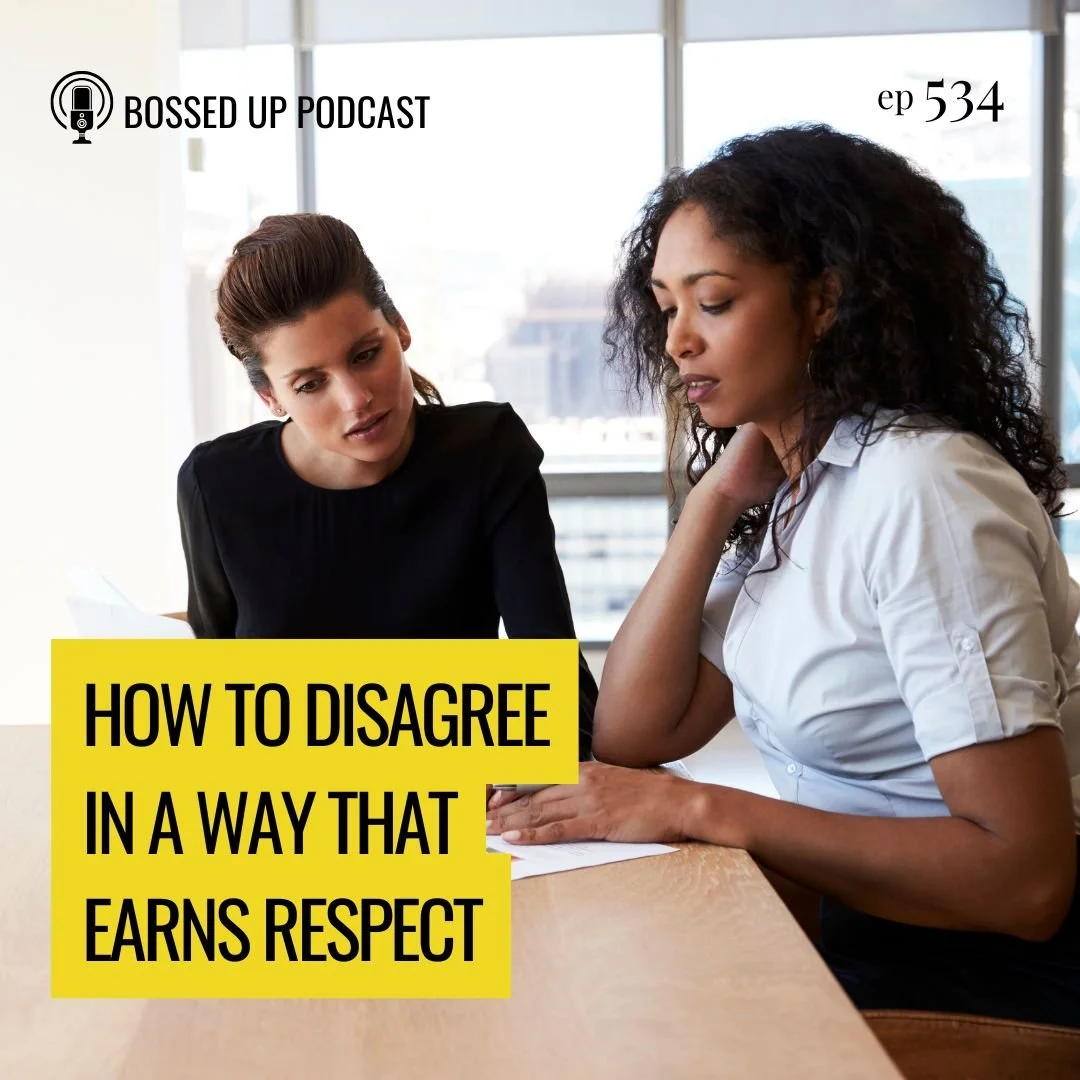
There’s a lot to gain from taking a risk and voicing your dissent at work.
When someone in a meeting or conversation at work shares an opinion you don’t agree with, what’s your usual response? Do you acknowledge the comment with a nod and hurry on, or do you push back?
All too often, people take the former route. Most of us—and women, especially—have been taught not to express disagreement or risk coming off as unlikable. But the truth is, not only can you share your honest opinion in a polite and respectful way, but doing so can help you in your leadership pursuits.
Case in point: A colleague recently told me that my willingness to push back on an opinion during a workshop I was facilitating almost two years ago made a big—and positive—impression! While I was flattered, I was also surprised. It shouldn’t be rare or notable for someone to express their true dissenting opinion about something—especially someone in a leadership position.
So let’s break down three steps I recommend you take next time you disagree. Who knows how many people in the room will remember it and respect you for speaking up!
Step 1: Ask an assertive question
Rather than launching straight into a counterpoint, warm up your assertive muscles with a query that challenges their underlying point. This kind of pushback can be made amicable quite easily. Say something like, ”Can you help me understand your perspective on this?” Or “Say more. I’m curious why you came to that conclusion.” By pressing pause and going deeper, you invite them to provide evidence for their statement. This is a way of modeling Dale Carnegie’s prolific advice around “listening to understand,” ensuring that everyone feels heard and understood, even if you’re about to offer a different take.
Step 2: Identify what it is you disagree with
Assuming their response to your question doesn’t convince you, it’s time to be clear that you disagree. You know I’m a big fan of being direct—just saying “I disagree” is a perfectly acceptable way to start—but you can get your point across more softly, too. Say something like “Hm, I see we have a difference of opinion here” or “I’m not sure I agree with that.” “I’d like to share an alternative perspective,” can be another helpful bridge, clarifying that you’re disagreeing about ideas, not people. Now you’re really speaking like a thought leader.
Step 3: Counter with your own assertion and evidence
Here’s where your pushback gets specific. In the situation my colleague was referring to, I challenged the attendee’s statement with research-based evidence that highlighted the potential problem with their assumption. By doing this, I wasn’t just disagreeing. I was showing I am willing to challenge assumptions, that I have the data to back up my points, and that I encourage and support healthy and respectful dissent, which is an incredibly powerful and important thing to model for your team.
Of course, there’s always a risk in stepping up and voicing a different opinion. You might lose the room and find yourself in the minority at times. But the rewards—in the moment, for your future career, and for the people around you—are often worth it. When you’re willing to take a stand when it matters, you’re doing some serious reputation management. Your executive presence levels up, and the promotion or leader identity you’re working toward just got that much closer.
If you could use some help speaking up at work, I have great news. I just reopened enrolment for Speak Up, my assertive communication accelerator that helps you become a more confident, cogent, and concise communicator.
And as always, keep making your voice heard on all things Bossed Up through our Courage Community on Facebook or in our group on LinkedIn.
Related Links From Today’s Episode:
Enroll now to SPEAK UP with authority:

-
[INTRO MUSIC IN]
EMILIE: Hey, and welcome to the Bossed Up podcast, episode 534. I'm your host, Emilie Aries, the Founder and CEO of Bossed Up. And today I want to talk about the benefit of hot takes at work and why I want you to have hotter hot takes moving forward.
[INTRO MUSIC ENDS]
If you are looking to garner respect, express authority, and be seen as someone with gravitas with something to say, and frankly, be seen as a leader or a leader on the rise, today's episode is for you. Just earlier this week, I was sitting down with a colleague who I hadn't seen in a while. He's an expert technical professional in his craft, and he said something to me about my communication style that really took me aback.
Almost two years ago now, like a year and a half ago, he saw me facilitate a workshop, a leadership and development workshop. And in that workshop, when some participants floated an idea that I didn't agree with or that I wanted to push back on, the fact that I didn't just tacitly accept everyone's idea and praise them all as they came in and say that, that's, yeah, that, sure, that's one way to look at it. Yeah, that's another idea. Like, here's a totally different thought that is also acceptable and I'm just going to nod along. The fact that I pushed back, the fact that I challenged the underlying assumptions that were being asserted completely took him by surprise and shaped his entire impression of me in a very positive way.
And so I want to talk about why pushing back, why disagreeing can only earn respect so that we can all practice this more and frankly, take strategic risks when it comes to communication in the workplace. So many of us, especially as women, are conditioned to just perfect, perform and please and get along and go along. And it can cause this sort of like, yes, woman mentality where we just nod along and give everyone the green light and want to be agreeable because we don't want to be seen as disagreeable, right?
We don't want to be seen as hard to work with. And so it can cause so many of us to be overly pleasing in our approach to communication. And yet, even though that feels like the safer choice, because don't get me wrong, there are social risks in pushing back and disagreeing. It's not actually the safer choice. There are unintended risks when it comes to just going along and getting along. What you miss out on is the opportunity to be seen as a thought leader, as a critical thinker, as someone who is willing to challenge the status quo.
So let's break down what this looks like in practice. I've got a three step strategy that I recommend for taking strategic risks and being willing to disagree in a way that engenders respect. First, I like to start by asking an assertive question. So if someone says something that you disagree with, like, well, that's clearly what the data says. I would start by challenging the underlying assumption with a question.
And I think questions can be very assertive, but can also be conveyed in a way that's very amenable, amiable is the word I was actually looking for there, but like, kind of, kind of collegial in how you presented. You could say, hey, what do you mean? Can you say more? Or can you help me understand how you're getting that from this data or help me understand where you're coming from on this. Ask an assertive question because that way you're not disagreeing outright necessarily. You want to listen to understand, from where is this person speaking? And that gives them the opportunity to clarify their statement, to defend themselves, and frankly to provide evidence behind their assertion, which frankly, you already disagree with.
So first ask an assertive question, like, what do you mean by that? Then identify, assuming you're still in disagreement, identify what it is you disagree with. Just name the fact that you disagree. And if it feels too assertive, too blunt to say, huh, I disagree, then here's a couple alternatives. You might say, oh, I think we might differ on this, or ah, I see we have a difference of opinion here, or I'm not sure I agree. Now those are all pretty gentle ways to say I disagree. You know me, I love being assertive. I'm a big proponent of assertiveness. So, I would also offer the idea that you can just say, huh, I disagree with that, here's why. But if it feels too blunt to do that, those are some warm up ways to get there without kind of triggering that person's defensiveness. So it's perfectly reasonable to say something like, ah, uh, I see we've got a difference of opinion here.
And then the third step is to push back by countering with your own assertion and evidence. So I particularly remember in this example I was referencing earlier, I was giving a leadership workshop and someone in the audience said, well, I believe in servant leadership. And they were using that to sort of say how we should be, you know, focusing on serving the people that we lead as opposed to what I was trying to get these leaders to think more about was, really clarifying their long term vision and aligning their department, their part of the organization with a broader strategic goal from their senior leaders.
Now we could have an entire podcast debating how important one or the other is and how they both, frankly, are essential for good leadership. But that's not the point here. The point is when I pushed back, I said something like this, which provided my own assertion and evidence to back it up. I said, you know, servant leadership isn't always the best approach or the only approach. With burnout rates of leaders at an all time high, we have to watch out for those servant mindsets becoming more of a martyrdom mindset.
And if you've been listening to the pod for a while, you know I have a lot to say about the martyrdom mindset, which is a term that I coined in my book Bossed Up in the first opening couple of chapters. If you want to learn more about my philosophy there, check it out wherever books are sold. But what you heard me do here is I pushed back with my own counter assertion, right? Here's my take, my hot take, and then immediately followed it with evidence.
So just to sum this up and kind of put it all together, you want to ask an assertive question, what do you mean? Can you say more? Help me understand where you're coming from, then identify and name the disagreement. Oh, I think we might have a difference of opinion on this, or I think we might differ on this. And then push back with your own counter assertion, with evidence. You know, I find that servant leadership isn't always the best approach. With burnout rates of leaders at an all time high, we gotta watch out for that servant leadership philosophy becoming a martyrdom mindset. And then you can talk more if you feel the need to.
But what you're doing in this moment is you are offering the room or the conversation that you're in, whether it's with one other person or a whole room of people, you're creating space for healthy dissent. And you're taking a risk, you're sticking your neck out there and you're being willing to challenge unspoken assumptions before moving the conversation forward. That is a very healthy thing for teams that engage in debate, and dialogue, and critical thinking.
And it was shocking to me, frankly, that that was so noteworthy. And here we are sitting down over lunch and I'm this senior engineering leader, say to me, I still remember a year and a half ago when you disagreed with the room [LAUGHTER] and you dared to create some space for healthy discussion about this one thing, that to me just like made such an impression and he was going on and on about how as a facilitator, as a leader, being willing to not just tacitly give the green light or thumbs up to every single idea that is offered is an act of leadership.
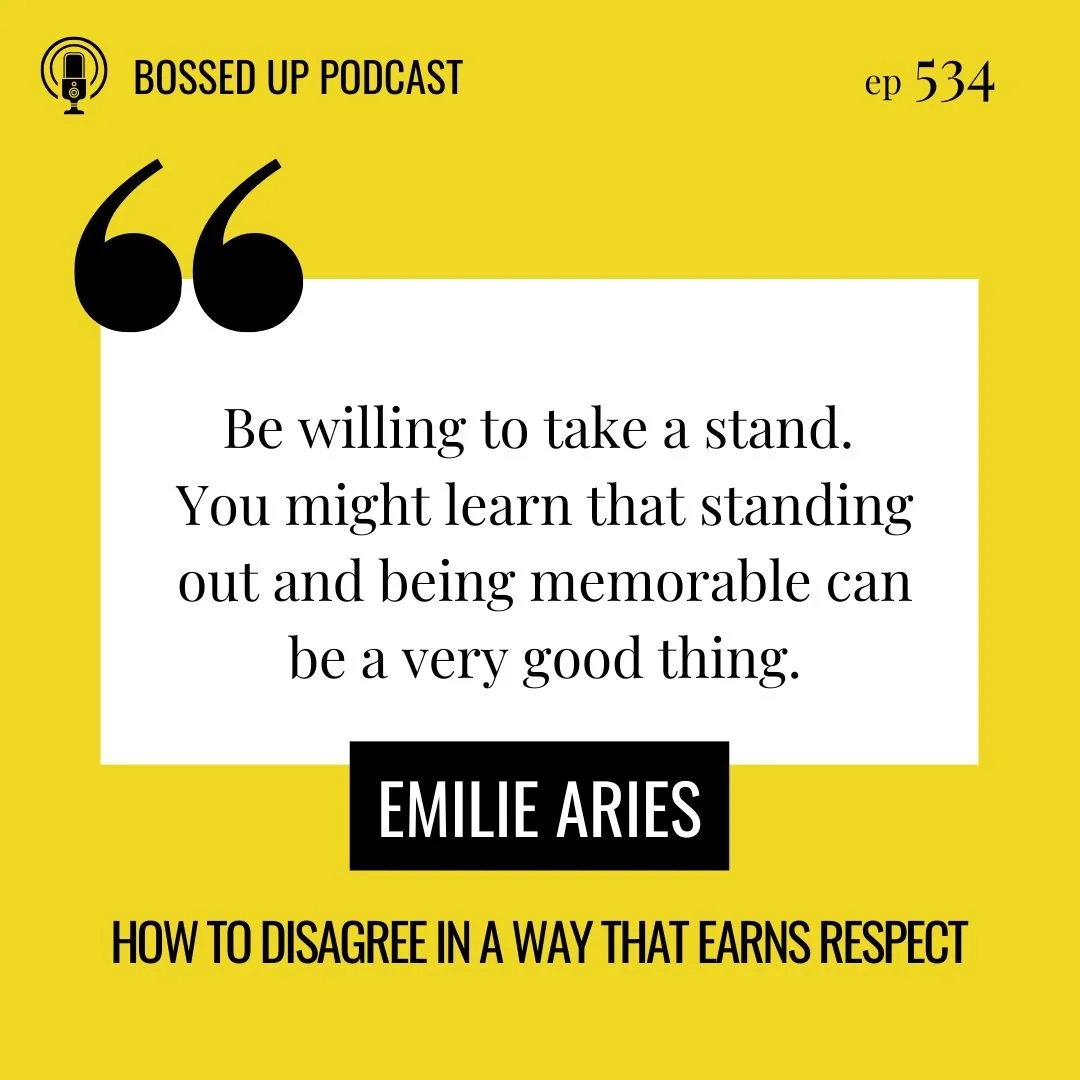
It is a risk. Don't get me wrong, there's always some inherent risk there. But the reward was this person thinks of me as a critical thinker, as a thought leader, and he has a lot of respect for me, that frankly, I was kind of surprised that that's what did it for him. So take that and run with it. I want you to think about sharing more hot take takes in this way. It doesn't always have to be like, disagreeable to be a disagreement, right? Like, be willing to take a stand. And you might learn that standing out and being memorable can be a very good thing. Especially if you want to up your executive presence. And if you can concisely communicate in a way that inspires confidence in what you have to say, all the better.
Now of course, if always helpful, to have an evidence backed sound argument too. I want you to be right and not just sound right, but you'd be surprised how the style with which you communicate can make a huge difference in how your message is received. And frankly, this is about your reputation management. So if you are going for that promotion, if you are trying to increase your executive presence, if you're trying to be seen as the leader you are, disagree more like, share more hot takes and be willing to take the risks to do so.
If you want to work on this with me. I'm so excited to share that we have reopened enrollment for Speak Up, my live 8 week assertive communication program that's all about learning through practice. We have small group coaching calls, weekly and video based curriculum that you watch on your own and practice at home. It's instantly applicable to any work experience that you have, whether you're currently in a leadership position or not, whether you aspire to one or not. This is a program that's all about upping your assertiveness and increasing your confidence in your communication. Learn more at bossedup.org/speakup and enroll today to secure your spot.
And as always, if you want a fully written out transcript and a blog post summarizing the key points from today's episode, head to bossedup.org/episode534.
[OUTRO MUSIC IN]
That's bossedup.org/episode534 and let's keep the conversation going in the Bossed Up Courage Community on Facebook or in the Bossed Up Group on LinkedIn until next time, let's keep bossin’ in pursuit of our purpose, and together let's lift as we climb.
[OUTRO MUSIC ENDS]