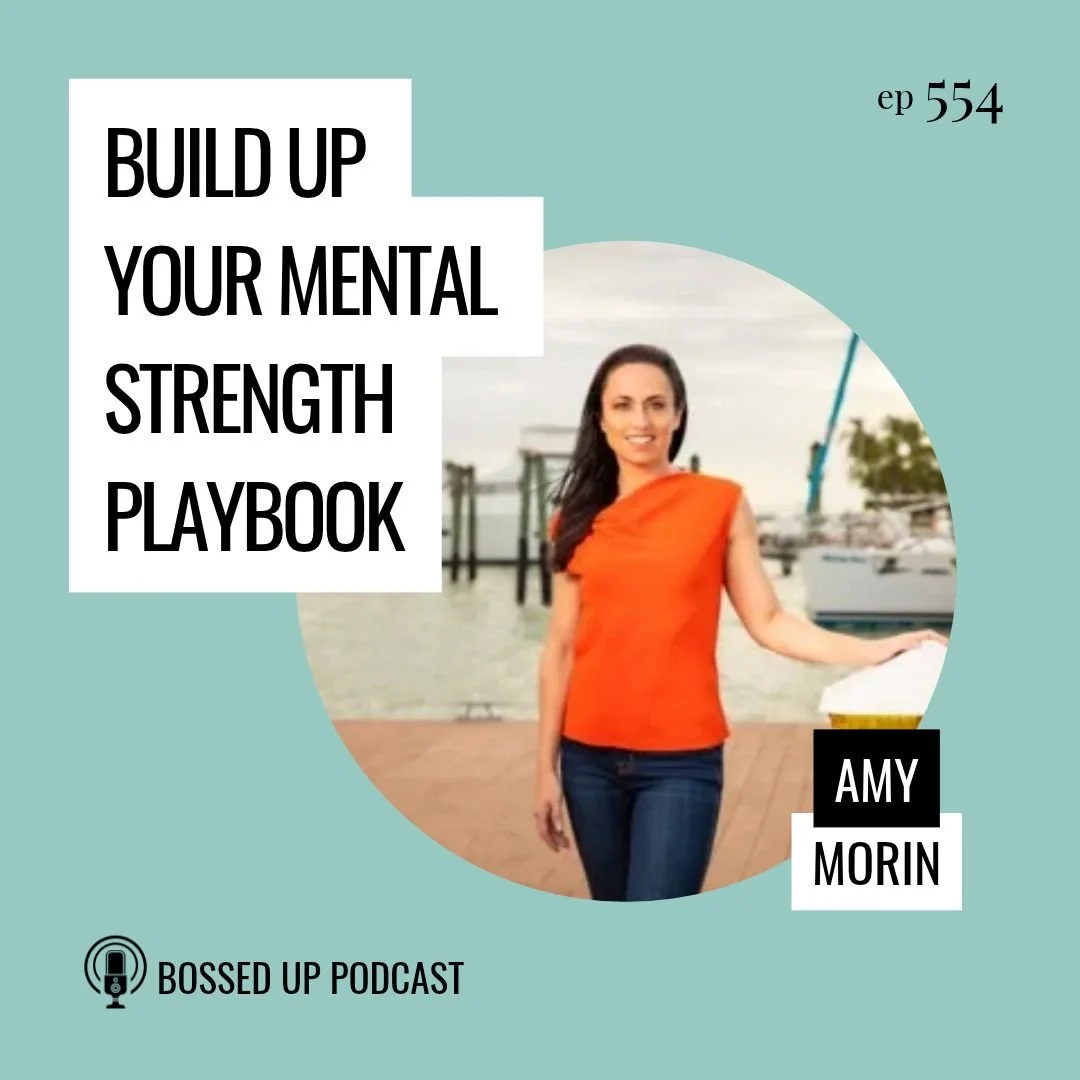
Episode 554 | Host: Emilie Aries | Guest: Amy Morin
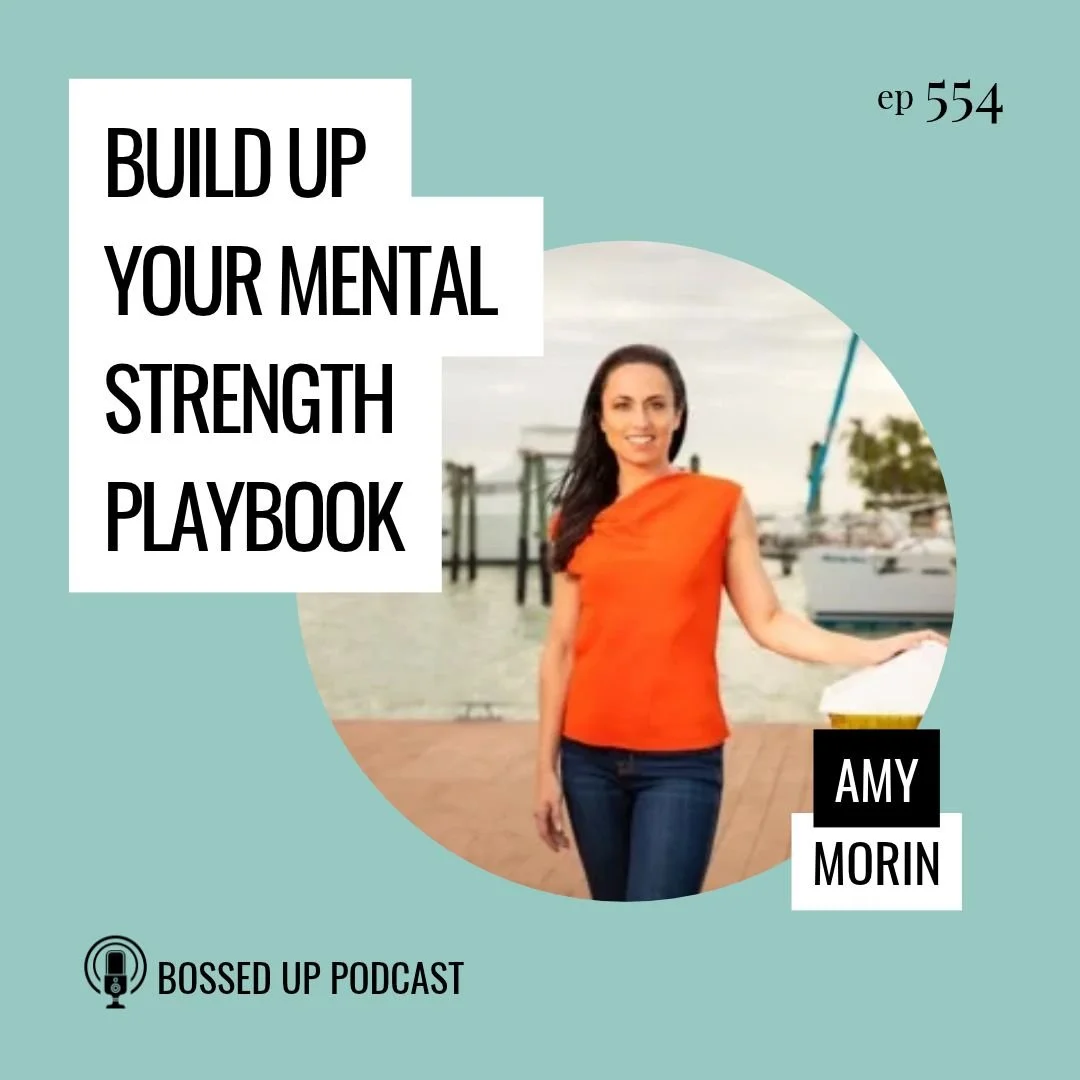
Improve your mental strength with coping strategies that fit into your most stressful days.
If you’re overwhelmed, overstimulated, or stressed out, you’re far from alone in feeling exhausted these days. The anxious achiever in all of us, mixed with the global uncertainty in the world these days, doesn’t exactly set the stage for relaxed and well-rested.
In your pursuit of ways to deal with the chaos, whether it’s a result of career or personal life or both, you may have come across the phrase “mental strength.” The term saw a surge in popularity after my guest, Amy Morin, published her article 13 Things Mentally Strong People Don’t Do more than 10 years ago. Since then, the psychotherapist and public speaker has published multiple books on the theme, sharing research-backed strategies we can implement throughout our days to build that strength. Those books have sold more than 1 million copies. She also hosts the podcast Mentally Stronger with Therapist Amy Morin, and her Ted Talk has been viewed more than 25 million times.
The don’t-do list that started it all
When Amy wrote her viral article back in 2015, she was in the midst of grief, again. Years earlier, she had lost her mother suddenly. She was just 23, beginning her career as a therapist. Three years later, her 26-year-old husband died of a heart attack. She recalls thinking that a lot of the practices and platitudes she had learned in school were falling short in helping her deal with these devastating experiences. She didn’t want to be “resilient,” necessarily; that just felt like bracing for the next shoe to drop. She wanted to grieve, and heal, and enjoy the life she had at the same time.
Things began to get better, she fell in love, and then her father-in-law was diagnosed with terminal cancer. Thrust once again into the depths, Amy responded by writing herself a letter of 13 things she shouldn’t do as she was working through her grief. Her logic: if she could follow a list of things she should do, she would likely be in a better place. A list of things she could skip entirely, like wasting time feeling sorry for herself or shying away from pain, felt a lot more accessible.
As it turned out, a lot of people appreciated her perspective. The published article went viral and led to the book deal, which led to further publications on the topic for kids, women, couples, and parents.
Amy’s latest book, The Mental Strength Playbook is designed for the busy professional who says, “Yes, I want to do my best at work, but my life isn’t just my job.” It’s not for getting ahead, Amy explains, it’s for being a real person. It’s packed with coping skills you can squeeze in when, for instance, your anxiety spikes 30 minutes before a presentation. It’s written to be picked up and put down, referenced briefly when you need it, not necessarily read cover to cover, and I love how even this layout considers the intended audience’s harried schedule.
When you’re struggling with confidence
I asked Amy what women, in particular, tend to struggle with in terms of mental fortitude, and what plays in the book will be most valuable to them. The first one she mentions is confidence, and I certainly see this a lot with my career coaching clients. Many women cite a sense of shrinking and self-doubt when they walk into a room.
Amy’s top tip for dealing with this is a more realistic, achievable version of “fake it til you make it.” When we fake it, she explains, or when we tell ourselves wild stories like “you’re the smartest person in the whole building!” our brains never fully seize on the idea because deep down we know it’s not true.
Instead, she recommends “acting as if…” In your head, say, “How would I walk into this room if I felt confident?” Put forward the confident version of yourself (the one that actually exists, just not right at this nerve-wracking moment) and your brain becomes convinced by your body. Your mindset shifts.
Amy also suggests keeping a victory vault, a physical collection of proof that you are capable of doing and succeeding at hard things. This helps in those moments where a single rejection or critique begins to spiral. In those moments, our brains love to spring into action, gathering up every example of where we’ve failed, all the way back to grade school. Distract it from this mission by presenting it with the list of the amazing things you’ve accomplished.
When boundary-setting feels unsustainable
The second big setback Amy sees women, especially, encountering is boundary-setting. This is another one that comes up for my clients a lot. They may feel deeply uncomfortable setting boundaries, as though it will make them seem unreliable or unapproachable or less hard-working. Or, they fully intended to set a boundary but didn’t for one reason or another, and now it feels like it’s too late to backtrack.
You are allowed to do a boundary reset, Amy stresses! Just because you’ve been answering emails at 10 pm or working every Sunday doesn’t mean you have to continue doing so. Sometimes, there’s an external reason that’s out of your control, like a client in a different time zone or a huge project about to launch. But that doesn’t mean you have to remain in always-on mode ever after. It’s about showing some self-respect. And in doing so, you don’t indicate to those around you that you’re incapable or selfish. Rather, you’re illustrating how to set boundaries and also get your work done. That’s an excellent example to set.
Small steps are still steps
Sometimes, life just goes crazy for a while. In times like those, Amy encourages us all to practice self-compassion. Maybe it’s not about nailing that project or giving 110% today. Maybe it’s just about getting through the day. Or the hour. The Mental Strength Playbook teaches us that we don’t need a perfect plan, we just need to decide which play to run next.
So many of us are on the cusp of a midlife crisis right now. We’re alarmed, wondering if we’ve seriously given our whole lives to work, and we want to take back some agency. Amy’s book is a phenomenal resource in that noble pursuit.
What coping mechanisms and strategies work for you during your most challenging times? Let’s normalize talking more about mental fitness and keep this conversation going in the Courage Community on Facebook or our group on LinkedIn.
Related links
LEVEL UP your coping mechanisms for
when responsibilities begin to stack up:

-
[CONFIDENT RHYTHMIC DRIVING THEME MUSIC WITH DRUMS STARTS]
EMILIE: Hey and welcome to the Bossed Up podcast, episode 554. I'm your host Emilie Aries, the Founder and CEO of Bossed Up. Today we are talking about building your mental strength.
[MUSIC FADES AND ENDS]
Something I think we all could use these days, especially those of you who are like me, overwhelmed, exhausted, overstimulated, stressed out or dealing with any of life's trials and tribulations. To help us unpack research backed strategies that all of us can implement throughout the course of our average day or week is Amy Morin, a psychotherapist, mental strength trainer, internationally best selling author and the award winning host of the Mentally Stronger with Therapist Amy Morin podcast.
Her books on mental strength, including 13 Things Mentally Strong People Don't Do, have sold more than 1 million copies and been translated into more than 50 languages. She's practiced therapy for over 20 years and she's a sought after speaker whose TED Talk, The Secret of Becoming Mentally Strong is one of the most viewed talks of all time with more than 25 million views. Amy lives on a sailboat in the Florida Keys and is tuning in to join us on the Bossed Up podcast today. Thanks for being here Amy.
AMY: Thank you so much for having me. I'm excited to be here.
EMILIE: I'm excited to hear more about this latest of many books you have under your belt, The Mental Strength Playbook. Congratulations, first of all.
AMY: Thank you.
EMILIE: Because I feel like I could use, [LIGHT LAUGHTER] I could use a pep talk if I'm being honest with you, around mental strength and just like general overwhelm, which I know a lot of my listeners can relate to. Before we dig into the meat of these stress coping tools and habits that you talk through in the book, tell us how you got here. How do you find yourself in this position of writing books about this?
AMY: So I'm a therapist by trade and I thought, oh, I have all these skills and tools and things that I learned in my college textbooks to impart my wisdom onto my therapy clients. But about a year into my work, my mom passed away suddenly and unexpectedly from a ruptured brain aneurysm. And it was like, in that moment I thought, oh, a lot of the things that I thought were going to be helpful when you're going through a tough time kind of fell short.
So I started studying mental strength, like for my own good, I guess. I really wanted to know, like, how do you get through tough times? But people talk about resilience like, yeah, I'm going to bounce back from something difficult. But I thought if I focus on that, my whole goal in life is just going to be to like, bounce back enough so I can brace myself for the next shoe to drop. And who wants to live like that? So thought, you know, how do you enjoy the good times too? And was really about mental strength. Like, how do you make sure you make the best out of this life that you have?
But three years to the day that my mom died, my 26 year old husband died of a heart attack. And I have to say, I didn't even know you could have a heart attack at 26. But the fact that it fell on the anniversary of my mom's death just felt like this incredible cruel twist of fate. Like what's the chances that that would happen? And I'm a 26 year old widow, I don't have my mom, and I'm now the only breadwinner. Like the one thing I didn't want to do at that moment in time was move. But we had already bought a house and I couldn't pay the mortgage unless I went to work. And then I even had to have side hustles on top of that.
So I had to figure out, how do you go to work when your heart's broken? How do you make sure that you can still show up and be professional? As a therapist, I'm helping other people deal with their problems and I have to figure out how do I set mine aside long enough that I could be present with people. And it took years, really. Like I still don't even have the language to describe what that was like. Because when you're widowed, it's not even like you just lose the person. It's like you lose your future too. All the dreams that we had, all of this stuff that I had thought my life was going to be, I had to grieve that too and then sort of build this new sense of normal. Like what do I want my life to look like?
And it took years, but I finally found like, love again. And I thought, ooh, maybe I'll get remarried. Like, life could be good. And then my father-in-law was diagnosed with terminal cancer. And I just remember being like, oh, you know, something good finally happens. And then here we go. I've spent so much time grieving, I can't lose somebody else. But it wasn't like I had a choice. So on one of the lowest days of my life, I wrote a letter to myself about what mentally strong people don't do. And when I was done, I had 13 things on the list. And I would just wake up in the morning. And I'd be like, okay, just read this list, and if you can not do these things, somehow you'll get through the day. And I was like, all right. After a few days, I thought, this is helpful. Like, this is doable. Just don't do something.
And so I thought, maybe it'll help somebody else. So I put it on the Internet, and 50 million people read it, and I got a book deal. And now I've written seven books on mental strength. And I still get to talk about it because I think it resonated with so many people who just wanted to know, like, why don't we talk more about mental strength? What does it look like? And it gets so confused with, like, mental toughness. And people think you have to suppress your feelings. And there's so many misconceptions about it. But I'm so grateful that I still get to be at places like this, where I still get to talk about mental strength all these years later.
EMILIE: That's amazing. What do you think it was about that list that felt so inspiring to people? Why do you think it went so viral?
AMY: I think it was a couple of things. Like, nobody knew the backstory, so first of all, nobody knew I had written it for myself. But I think because it was a don't do list, it was probably one of the first ones about what not to do. But also the term mental strength, like, you can see, like, in Google Analytics, it was occasionally Googled. But then after the article came out, it was like, these people were like, oh, this makes sense to talk about mental strength. Why don't we talk about that more often? And I think it was that combination, plus the number 13 didn't hurt because people are a little bit naturally curious about that as well.
EMILIE: Yeah, that's true. Yeah. And I feel like, you know, as a writer, it's funny because there's this theory behind, like, writing when you're in the middle of your story, like, you were in the throes of the hardest times in your life when you wrote that list. And it's like, I think when people write from that vantage point, there's something viscerally recognizable to other people who are in that kind of a s*** storm, for lack of a better word, probably. Like, I think that really comes through in the way you wrote it.
And also, you're right, like, these platitudes about what to do to take care of yourself and fill your own cup falls so short when you are just, like, so fried emotionally exhausted that I think the inverse of that in the form of what not to do, the bad habits to watch out for that will keep you in the storm as opposed to helping you move through that is a really interesting paradigm, right? And I know this book touches on lots of other things, but before we even get into that, I'm wondering if you can just give us a smattering, an example of some of the key bad habits on that list that we should be avoiding. I know in your TED Talk, you talk about, you know, throwing yourself a pity party, and I'm wondering how that lands with folks who are in the throes of depression or grief who are like, yeah, I'm throwing myself a pity party. Like, how dare you tell me not to throw myself a pity party. But what you're trying to say is that's not gonna help you move forward.
AMY: Right. Yeah. For me the last thing I wanted was a to do list, right? I had so many people that were like, you know, make sure you exercise and make sure you eat healthy and make sure you sleep well. Yeah, if I could sleep and I could eat and I could exercise, that would probably mean I were doing well already. And it's really tough to do those things when you're struggling. But a list of what not to do felt much more doable. And even, like, don't feel sorry for yourself. Like, grief is the process by which we heal. So it's so important to let yourself be sad. But I didn't have to let myself be, like, well, my life is worse than anybody else's. It's never going to get better again. And if I really exaggerated it, that would have kept me stuck.
And so this list was all about those things that I had seen in my therapy clients over the years that kept people stuck, whether they were going through grief or just normal, everyday struggles or anything in life, really. But it was the things that my therapy clients had really taught me, because I would see people that would go through life, and they were, like, still hopeful and optimistic, and I'd see other people that were, like, just really hanging on by a thread. And I thought, what's the difference? And a lot of times it wasn't just about what they did. It was more about what they didn't do. People who didn't do certain things seemed to be able to get through life so much better.
EMILIE: Yeah, that's interesting. It's sort of like the underlying beliefs baked into your narrative, which we feel like we can't control, but we absolutely can. It's just hard it's really hard. So what inspired this latest playbook? I love the terminology used here. Different plays that we can run to sort of up our mental fitness. How do you conceive of like mental strength as akin to fitness. And tell me about what inspired this latest book.
AMY: Yeah, so you know, just like you can build physical fitness and you can build physical strength by going to the gym. Very similar. It's all about the little things you do every day to build your mental strength. And this book was really written because a lot of people were saying, okay, but what do I do when I'm sitting at my desk, it's a Tuesday, it's 2pm, I have a presentation in 30 minutes, my anxiety is skyrocketing, like, what do I do in that moment? Like, sure, I'm not feeling sorry for myself or I don't have time for an entire life overhaul, but like, what works right now?
So I wanted to write a book that was more like that. Like, what can you do in the moment at work? You don't have access to a lot of the coping skills you have at home, right? If I'm nervous about something at home, in reality I can put that off until tomorrow. But it's not like I can tell my boss, you know, probably not going to give that presentation today, just not feeling it, right? So what do you do? How do you get through it? Or you have a project that's due on Friday and you're overwhelmed, you still have to do it. You can't just put it off. So, that's where this book was born to say, here's some strategies. And I don't know your boss, I don't know your work life, I don't know you, but here's a bunch and I bet you can find something that will work for you right now.
EMILIE: Yeah, And I love just how research backed everything is, right? And so I'm curious what the gender element looks like from your vantage point here. Like where do you see women in particular experiencing these challenges in the workplace? And which plays do you think are most relevant for women in particular?
AMY: Oh, good question. You know, I think one would be the confidence aspect. I see a lot of women who will say, you know, I walk into that room and I just already shrink myself, I'm filled with self doubt, I'm having difficulty like stepping up to the plate. Obviously there's studies that will show like, on LinkedIn, we don't brag about ourselves as much as men do. And there are certain factors that hold us back. But there's also things we can do so that we can feel confident and crush it in the moment too. So that's a big one.
And I think another one is our interactions, right? When it comes to like boundaries, the women I work with, a lot of them will say, you know, I meant to set a boundary, but then for the last three or four weeks I've been answering emails after work. How do I now go back and say, yeah, I'm not going to do that anymore? Or you know, my role, there's been some creep, I've started to do things that weren't really within my scope. But now how am I going to push back on that without, without, you know, looking like I'm not a team player. So that's another, another big one that I see.
EMILIE: Totally. And I think those listening are relating hard to what you're saying right now. So let's unpack those one at a time. What are some of the confidence catalysts that you would advise to the woman who's got that presentation in 30 minutes? Like what, what are some of the research backed strategies that you think we should run as plays in our day to day?
AMY: So one of them is act as if. So a lot of people come into my office and they're like, you know what, I need you to give me some confidence so I can apply for that new promotion or so I can switch jobs. But like, you don't sit on the couch and develop confidence. Sometimes you have to just like go out there and take the action. But if in your head you can say, like, if you're going for an interview, what would I do if I felt confident? If I walked into the room feeling completely confident, what would that look like? I'd make eye contact. I'd, you know, hold my shoulders back. I would speak slowly, whatever it is.
And it's a little different than fake it till you make it. Because some people are like, yeah, just fake it. I don't think we should act fake. I think we should just put forward our most confident version of ourselves. And something funny happens when your body starts to act as if you feel confident, your brain's like, oh, maybe we are. And it starts to catch up. And so whether it's when you're giving a presentation, whether you are interacting with people or you just are trying to practice speaking up in meetings, act like you have tons of confidence and pretty soon your brain is like, okay, we're feeling pretty good here.
EMILIE: I love that. Yeah.
AMY: And it shifts, it shifts your mindset. So that's one. Another one is, I think we should all have a victory vault. And this is for those times when you get rejected or you are filled with self doubt, you get turned down for something, passed up for a promotion. Because when that happens, there's that sting of rejection or discouragement. And all of a sudden your brain remembers all the other times you felt that emotion. So you're like, you know, I got rejected in the third grade by when I applied for the play, or I didn't make the basketball team in high school. And suddenly this like file opens of all the times in life you've experienced that emotion. And it's pretty quick to then say, gosh, this happens all the time. I always get rejected. I must be a loser.
But if you have a victory vault, this could be a piece of paper, maybe it's a folder on your phone, but that says, like, here's the cool things you've done in life, but also here's the lessons you learned along the way. And they can be personal, they can be professional, but sometimes it's like, you know, I went to a doctor's appointment with my mom and I advocated for her and got her the medication she needs. Like that's a huge victory in, right? And what did you learn from it? Well, I can speak up when I have to or when it matters. If you have a list of even 10-15 big victories in life and you have a bad day, like you read over that list and suddenly your brain starts to remember, oh yeah, I can do hard things. Like, oh yeah, there's some amazing things I've done.
EMILIE: I like this because the fake it till you make it philosophy has always struck me as like really shallow chest thumping bravado underneath which is like a very shaky foundation, right? And sometimes like, I find when people are trying to hype themselves up to feel confident, they get into the space where they feel like I can do no wrong, or they have to tell themselves that I've never made a mistake. Like as though that's the script that gets you where you want to go, but it doesn't, right?
Like I think embracing the nuance there of I have a vault of all my past failures and like what I've learned from them. I'm not perfect and I have a vault of all the winds and all those neural pathways are firing and just acknowledging that everybody learns through failure, sometimes almost normalizing that iterative learning process as opposed to saying I can do anything, you know, bravado. Which is tricky because when you're telling people to give yourself a pep talk or to take out the mental trash, it doesn't mean to pretend like you're perfect, right?
AMY: Yeah, that's it exactly. And there's research that will show. If I look in the mirror in the morning and I high five myself and be like, oh, you're the most amazing human on the planet, it doesn't actually make my day better because I don't necessarily believe it, like, deep in my bones. And I don't think that that's like, what I'm aspiring to be. But if I can just remember, like, yeah, all right, I've made some mistakes, but I'm still an okay person. You'll do so much better than when you try to fill your head with all of these fake positive affirmations.
EMILIE: Yes. I love that so much. And it's easier said than done, but there's like, you know what I really struggle with over the years, Amy through, and I'm no therapist, so this is well beyond my scope. But just as a coach, as a career coach and a leadership development specialist, it's like, getting folks to step into their power to take risks, to like, really calculate their risk tolerance in their careers and like, push themselves to go for what they really want. If there isn't a foundation of self worth there to spring from. If there isn't a belief that you're a good person, even if you f*** up, even when you go for what you really want and totally fail to get it, like, if there isn't some deep seated sense that you belong in this world and that you have a right to exist here, like, it's really hard to get there. So what do you do when someone like, how do you build mental strength when really what's lacking is self worth?
AMY: Yeah, and that's a good question because I think a lot of people believe that it's like achievement, right? That next achievement is going to make me feel good if I hold a specific title, if I get the promotion, then finally. And we know that's a really shaky foundation because once you get that achievement, you feel good for a minute, but it's pretty fleeting. And then you think, well, I need this next thing. And you're always chasing the next thing.
And that's at the heart of what most people come to therapy for is this feeling of deep down, like, I'm not good enough or I'm only as good as my, my latest achievement or I have to chase the next thing. So sometimes, yeah, it boils down to figuring out, like, what are my values in life? And am I living according to my values? And when people can do that, sometimes they're like, all right.
EMILIE: And even when you're out of alignment with your values, at least you can like, acknowledge where there's a gap. I find the. You know, I used to live in dc, I worked in politics for a while before I moved out to Denver. And I started my own business in DC through, you know, Bossed Up in DC and there's a lot of merit badge chasing in DC. Proximity to power gives people this sensation that like, oh, if I'm close to people with real power, if I can get some real authority over others, then I'll feel good. And that's kind of exhausting to be around. I found it very tiresome. Just like, this constant need to prove yourself worthy can lead to some really weird behavior.
AMY: And especially when we put our self worth on something that's not a hundred percent within our control, right? If I'm like, okay, I work with this person or I'm aspiring to be next to this person, and then I can't control what this person does or if they leave the position or they behave badly. So, yeah, that's tough.
EMILIE: Which is common in DC, isn't it?
AMY: Right.
EMILIE: And what I remember when we moved out here, my husband Brad and I met in DC and moved out here to Denver. I just felt like, whoa. I don't know if it's just being within view of the Rocky Mountains, which is a very humbling, you know, experience as a human, but there's just something here. I called, I mean, I'm from the Northeast, so I say to people, like, people here are just really well adjusted. There's like a humility here that's like, we're not in New York. We're not chasing money or fame or, you know what I mean? Like, there's just this collective sense of grounding that I found really calming here. And I still have a boatload of ambition to be clear, I love, I love achievement, but not at the cost of my values. To your earlier.
AMY: Oh, I love that. And you're right. Sometimes I think like, the changes in life are almost as simple as, like, yeah, go outside, change the people you're around, do something a little bit different, right? Spend time in nature, have some hobbies,...
EMILIE: Yeah, touch grass baby.
AMY: …look at the world just from a slightly different perspective, right? There's truth in that.
EMILIE: Maybe touch the ocean for you. You live on a houseboat for 11 years now.
AMY: And very similar, I think Living on a boat has shifted so much of my perspective about myself and about life and what's important. And I mean, how could it not just being in nature and I see dolphins swim by, right?
EMILIE: And just like being subjected to nature too. Like talk about, there's some beautiful metaphors there about emotional storms and, you know, choppy waters and all of that, but it's, it's undeniable when you're that attached to nature in some way to…
AMY: Absolutely.
EMILIE: …feel part of something greater than your day to day trials, right?
AMY: Definitely.
EMILIE: So we talked about the confidence piece. I want to go back to what you said earlier about boundaries and scope creep because I find so many women in the Bossed Up community feel this need. In fact, let me illustrate it with a story actually, because one friend of mine in the Bossed Up network recently got a new job and she's so chronically burnt out because at every job she finds herself like over functioning, frankly, trying to prove herself.
And I said, watch out, girlfriend, because when you just get a new job, you're gonna feel that need to prove that they made the right call. And I said to her, just keep in mind, you already got the job, they already picked you. So when you start, don't start by overperforming. Start by clarifying some solid boundaries. And she was like, oh my god, yes. I was like the enemy. Like the calls coming from inside the house on this front, you know, and this is so common for high achievers. So what do you think we need to actually maintain that sense of power and boundary?
AMY: Well, you know, we talk a lot about boundaries, but certain people will find themselves stuck, right? Like, well, I've been doing the other person's job for quite a while, so now what do I do? How do I get myself out of it? And in the book, I talk a lot about initiating a boundary reset. Like, just because you haven't had a boundary for three months or four years, it's okay to reset that boundary. And I'll work with people who are like, you know, I was working with an international team, so yeah, I was working some strange hours and I was answering emails during the evenings. And now we're no longer doing that project. But here I am because people have come to rely on me answering email at 9pm so here I am.
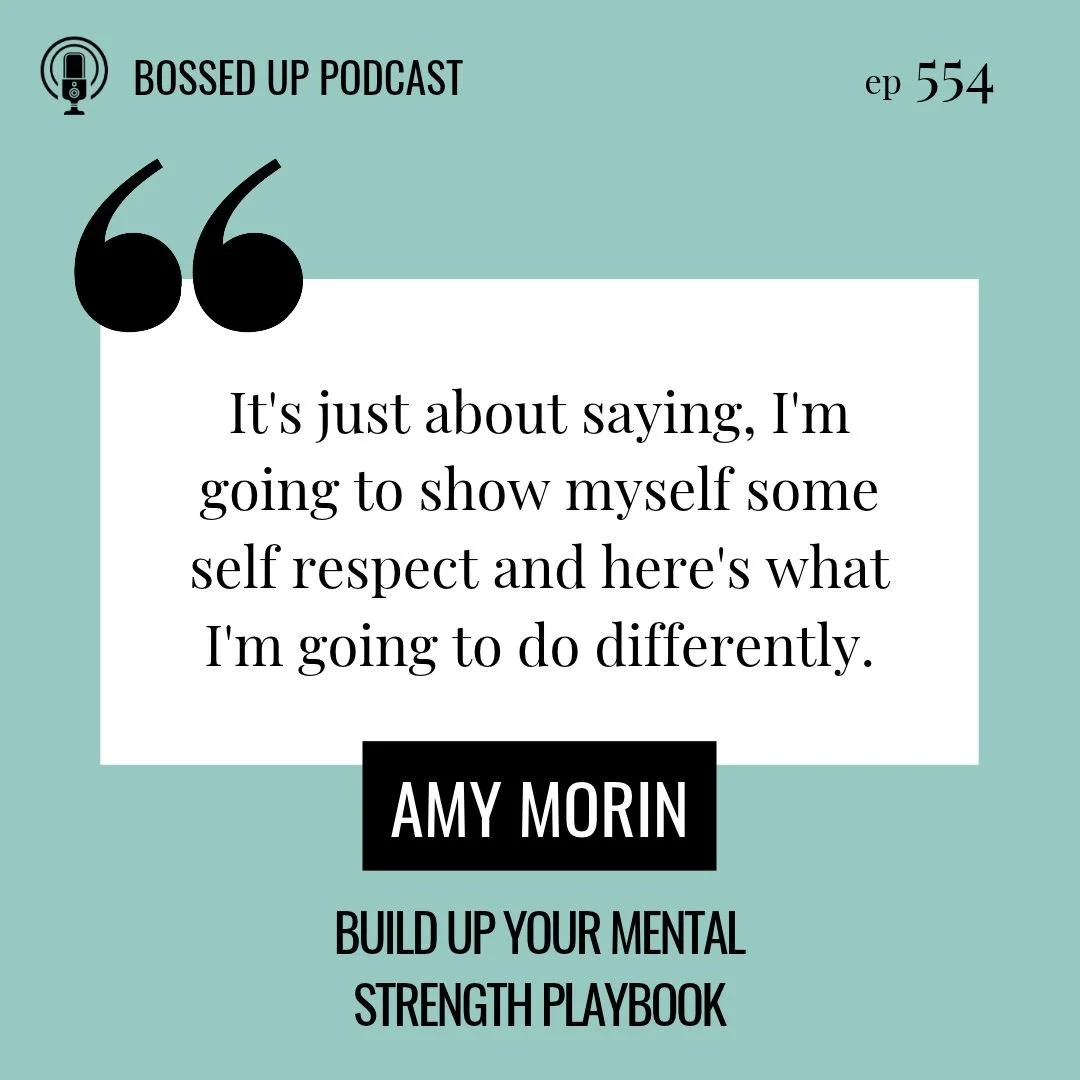
And we'll talk about like, just because you've been doing it doesn't mean you're obligated to do it forever. You can go back and say, gosh, you know, this has gotten away from me. I need to, to make a shift. Sometimes you don't even have to tell people. Maybe you just put the old auto responder on that says I'll get back to you tomorrow after 6:00pm I'm not answering emails, whatever it is, but it's okay to do that. And sometimes it's about a conversation with somebody, sometimes it's just about checking in with yourself, like, all right, I'm not gonna bring my work home with me or I'm not gonna feel like I always have to be available or I'm gonna set that limit and say, if you have a question, please ask me before 10am because I can't answer questions all day. It's okay to do that. And it doesn't mean you're being selfish. It doesn't mean that you are somebody who's, you know, not capable of doing all of things to all these people. It's just about saying, I'm going to show myself some self respect and here's what I'm going to do differently.
EMILIE: Yes, I love that term, self respect. And it's coming up for me so strongly right now because I work in a corporate environment now and it's my first corporate job actually ever. And I work with a high achieving, chronically overwhelmed person who's senior on the team. And she'll start her Monday morning check in with the team saying, hey everybody, I'm so sorry. I worked really late and you know, into Friday trying to catch up. I was at the office until 10pm and then I had friends over this weekend so I didn't get everything done. I planned to get done last night. She's talking about Sunday night. So if I owe you anything, I'm so sorry. And I'm like, what is this? Like, have some self respect. Like what are you normalizing? What are you signaling to everyone? Like get it together. Like even if you do have bad boundaries, even if you are over functioning, don't advertise it.
Because I feel embarrassed for this person sometimes. I'm like, no one's asking that of you. And I'm sure she feels chronically behind and she's just trying to catch up. She's just trying to do her best. But it sends this signal to everyone else, so we're supposed to be doing the same and it just creates this palpable anxiety that is contagious and does not yield the best outcomes in my opinion.
AMY: And you're right. And sometimes people think when they're bragging about like, oh, man, I should have done this. Or I was working so late last night. Like they feel like this is making me look really good. Like I'm dedicated to the cause. But on the flip side, it can be kind of cringeworthy because…
EMILIE: It is.
AMY: …Have some self respect. It’s okay to say no.
EMILIE: Oh my god. That's exactly it. It's like corporate cringe, right?
AMY: Right.
EMILIE: I never thought about it that way, but it totally is. I'm just like, I respect you more than you respect yourself. So please, for the love of god, get it together. And it's tricky because it's hard to tell someone like my coaching clients, you're kind of habituating other people, you're conditioning other people to expect this from you. So then it becomes a self fulfilling prophecy when someone expects you to reply at 10pm if you've created that expectation and it feels a little victim blamey, you know, how do you overcome that when you're helping someone see their own part in bleeding their boundaries, you know what I mean? And like in poking holes in all their boundaries?
AMY: You know, I think it's tough, but for people to know, like, if I want to be a high performer, like that comes at a cost, right? High performers are the ones who burn out the fastest because they can't say no. They can't put the brakes on when they need to. They struggle to be like, all right, this project isn't as important, so maybe a mediocre job is, okay, I don't have to like, crush it every single time. And, but having that conversation with you, like, what is it costing you? And sometimes people think like, this is a sprint. When I get this project done, then I can relax, but they can't. And then there's the next project, the next deadline. There's always something right around the corner. And before you know it, like three years of your life have gone by and to be able to then talk about like, what does that cost you? Time with friends, time with family, your health, your emotional well being. And when people can look at it that way, of okay, maybe, maybe it is costing me more than I thought and is the payoff really there? And often the answer is no.
EMILIE: Let's talk about that. So here's where I'm at, okay? I'm hearing the comeback from my listener, which is yes, but I am in a sprint actually. And I can't actually control these conditions that I'm in. For instance, I have a one year old and a four year old who refuse to go to bed before 10pm at night. And I'm losing my f****** mind, if I'm being honest with you, Amy, because my husband and I work full time.
They go to school ECE full time, they're very busy. They have gymnastics. We've done swim lessons, we've done dance class and music class. And I cannot seem to get my children. I mean, we're in occupational therapy, we're doing early intervention programs through the state of Colorado. I feel like a failure as a parent sometimes because. And this is where my own narrative really gets in the way a little bit. Last night I was like having a meltdown at 10pm and I told my husband, I give up, you're gonna have to go in there. Because I was like actively helping, trying to help them, probably hindering their ability to get to sleep between 8:45, which is already late for a 1 year old, and 10pm and I'm like, it's not like this isn't working.
So I know this time will pass. Like everything about early childhood is so fleeting. But this does not feel like a boundary I can negotiate. I'm trying to negotiate with these little terrorists and it's not going super well. So what do you say to someone who is in a sprint or in some kind of acute stressful period that I know will not last forever, but it doesn't really make it feel any better during that insane time of my life that I'm in.
AMY: You know, I think for all of us there's those seasons of life, right? That your personal life feels like it needs a lot more attention and it bleeds into work. So whether it's somebody who says, you know, my parents are sick or I have a, my loved one has an illness and it's kind of all encompassing. And when we're in the season like that, like, you don't have to have life all figured out. You don't have to balance everything but to give yourself permission. Like I'm just going to figure out how do I get through today? And if I'm tired and I'm like, cranky and I'm worried, maybe I'm really anxious about something in my personal life, like how do I get through the next hour at work?
And that was another reason why I wrote this book, because I just wanted people to know, like, you don't have to have a perfect plan. Sometimes you just need to know what play you're going to run next. Like, okay, how am I going to get this report done? And we don't talk about that often enough. Like our personal struggles like we're supposed to check them at the door. That makes no sense, right? I mean, people are sitting at their desks and they're getting like life or death phone calls about family members.
And then you walk into a meeting and try to act like nothing just happened. It's so bizarre that we live like this, but for a lot of people that's the reality. Or you get a call that like, hey, your mother just fell at the nursing home and then you go to your next meeting or you jump on your next sales call. And the decisions that we have to make, like, oh, do I go pick up the kid from daycare or do I try to stay at the office or do I go to the hospital to see my loved one again or do I try to hold down my job?
EMILIE: It does feel sometimes like it's like, who do I choose to disappoint today?
AMY: Yeah, yeah.
EMILIE: Like that's kind of how it feels. You're like, I actually cannot, you know, due to the space time continuum, I can't make everyone happy today. So it's like who gets my A game and who gets my C game? And I really like that idea of like moving the finish line closer to just like this next hour, this next play because you just have to make the best call you can with the info you have. And you can't, you can't please them all. Like, you just can't please them all.
AMY: Right. I mean, it would be great if we could all, you know, be completely well rested and our personal lives are going amazing and you walk into work and you're like, I'm going to crush it today. And you have complete energy. That's just not reality, right? And sometimes we just have to like, practice some self compassion with. Here we are. You know, I've got six hours of sleep the last three days in a row and I'm going to function at my best. And you know, I'm distracted at best, but here we go.
EMILIE: Yes. That's so real. And what I've been doing lately, which to me feels like a radical act of self compassion is just not like not broadcasting that.
AMY: Yeah, yeah.
EMILIE: Like, how was your weekend? And it's like I got like four hours of sleep a night. You know, Is that anyone's business? No. I'm muddling through the week. Does anyone need to know that? No. You know what, I don't think you're going to know the difference between my C game and my A game. So I'm not going to go ahead and report it out to everybody, period.
AMY: You are absolutely right. I think that sometimes we're like, oh, my gosh, everybody can tell, or I'm really dragging, and a lot of times nobody else is going to notice anything. And while we think, oh, I have to be authentic, I have to share. If somebody asked how my weekend was and I say, good, then I'm being fake. No, by all means, you don't have to tell people.
EMILIE: That's been very empowering to me because I'm usually an oversharer. And just learning to shut my mouth a little bit has been a real radical act. [LAUGHTER] Amy, this has been truly, like, such a joy. Let me ask you this, like, when you think about this amazing book, which just has play after play in it, you've given us a little bit of context already. But who do you really think will benefit most from picking up a copy of this book?
AMY: You know, I think anybody who says, like, yes, I want to do my best at work, but my entire life isn't just my job. Like, I want to make sure that I'm getting the most out of this one and precious life I have, I think those are the people that are going to benefit the most. This book isn't written to be like, here's how to be the world's best high achiever, or how to always get ahead. It's more like, here's how to, like, be a real person who goes to work every day, and you don't end up being the burned out, frazzled one who is irritable and can't stand yourself or your job by the time you turn 45. So that's my hope is people will be like, all right. Like, I'm doing it, and here I am, and I'm getting through work and I'm getting through life, and I'm doing okay.
EMILIE: I love that. I think that's the message for the moment we're in right now, isn't it?
AMY: I think so.
EMILIE: It's like, you know, people, a lot of people I know, especially as millennials, who are on the cusp of a. A good old midlife crisis. Although I think you got there earlier than the average, right? I know quite a few peers of mine who are, like, really hitting a midlife crisis right now. It's like asking ourselves, like, is this it? Like, have I given my entire life to work? And do I like that about myself? And if not, it's like, what would it look like to build back some mental strength and build back some agency over our lives.
AMY: I agree.
EMILIE: Amy, where can my listeners keep up with you and your great work?
AMY: So my website is Amy Morin LCSW as in Licensed Clinical Social Worker dot com and on there you can find links to all my books as well as my podcast, which is called Mentally Stronger with Therapist Amy Morin.
EMILIE: Awesome. I'll put links to all of that in today's show notes. Congratulations again on this phenomenal read.
AMY: Thank you. I appreciate it.
EMILIE: For links to everything we discussed today, head to bossedup.org/episode554. That's bossedup.org/episode554. There you'll find a blog post summarizing today's key points and a fully written out transcript if that's your thing. And I just wanted to add one more note about Amy's book, The Mental Strength Playbook that I found really appealing is that it's one of those kinds of books that you can pick up and put down as needed and that you can kind of flip through like a coffee table book. The way she wrote this book is so helpful for someone like me who is busy and overwhelmed and maybe like, my attention is in 25 different places, but you can pick it up and just like, read a quick chapter at a time. And it doesn't have to be this long, comprehensive, start to finish book.
So you can kind of jump around the different plays that she has. And she is really detailed on, like, all the different plays, how they work, why they work, and when to run which play. So if you're looking for a mental strength playbook that is kind of like a reference guide for you to cope with a crazy time in your life or a challenging time in your life. This is a great book to pick up wherever books are sold.
And now I want to hear from you. Let's keep the conversation going as always after each episode in the Bossed Up Courage Community on Facebook or in the Bossed Up Group on LinkedIn. And if you're navigating a challenging time, what coping mechanisms and strategies are working for you? Have you come across Amy's list of 13 things mentally strong people don't do? And has it been helpful? As you've navigated life's challenging moments? Let's keep working on this together,
[CONFIDENT RHYTHMIC DRIVING THEME MUSIC WITH DRUMS STARTS]
let's keep talking about these things and shedding light on how important our mental fitness is alongside all of your other many important things that are going on in our lives. And until next time, let's keep bossin’ in pursuit of our purpose, and together let's lift as we climb.
[MUSIC FADES AND ENDS]